Antiquorum Auctioneers since 1974

Geneva, Nov 08, 2026

LOT 423

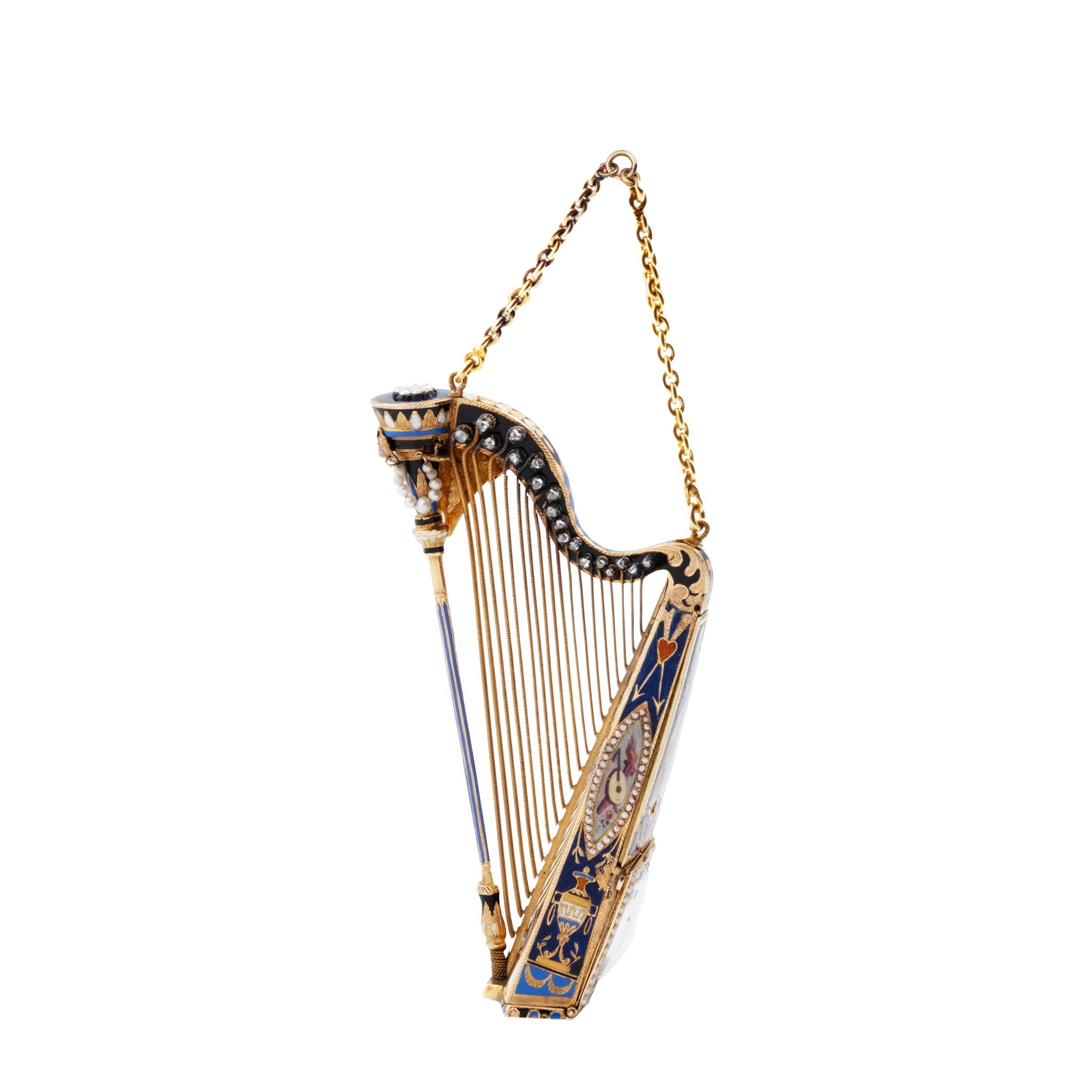
PIGUET & CAPT., SWITZERLAND, “THE MUSICAL HARP” WATCH, IN THE FORM OF A HARP, MADE FOR THE CHINESE MARKET, GOLD AND ENAMEL

CHF 30,000 - 60,000

HKD 286,000 - 580,000 / USD 36,500 - 73,000 / EUR 32,400 - 65,000 / JPY 5,760,000 - 11,510,000

Sold: CHF 37,800

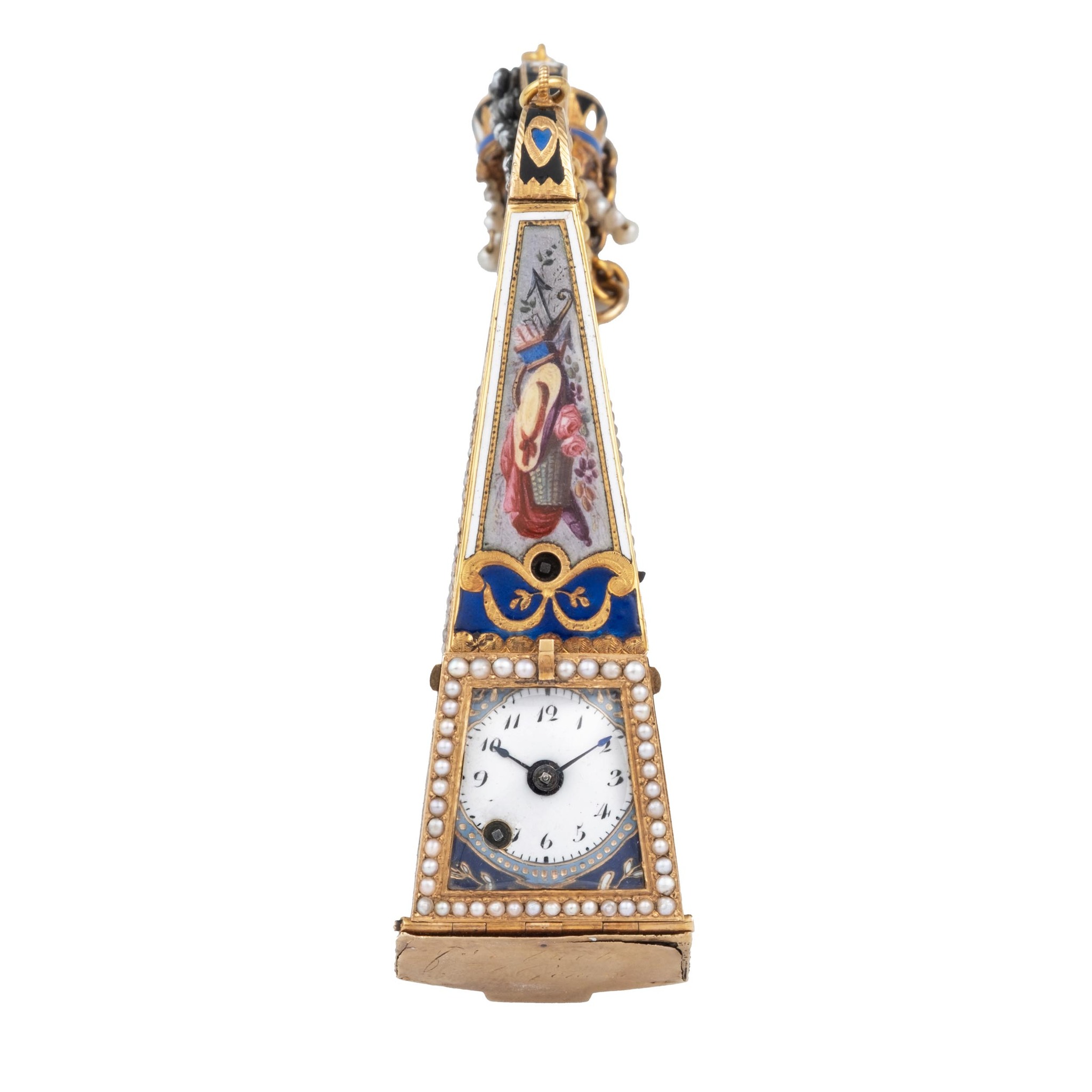
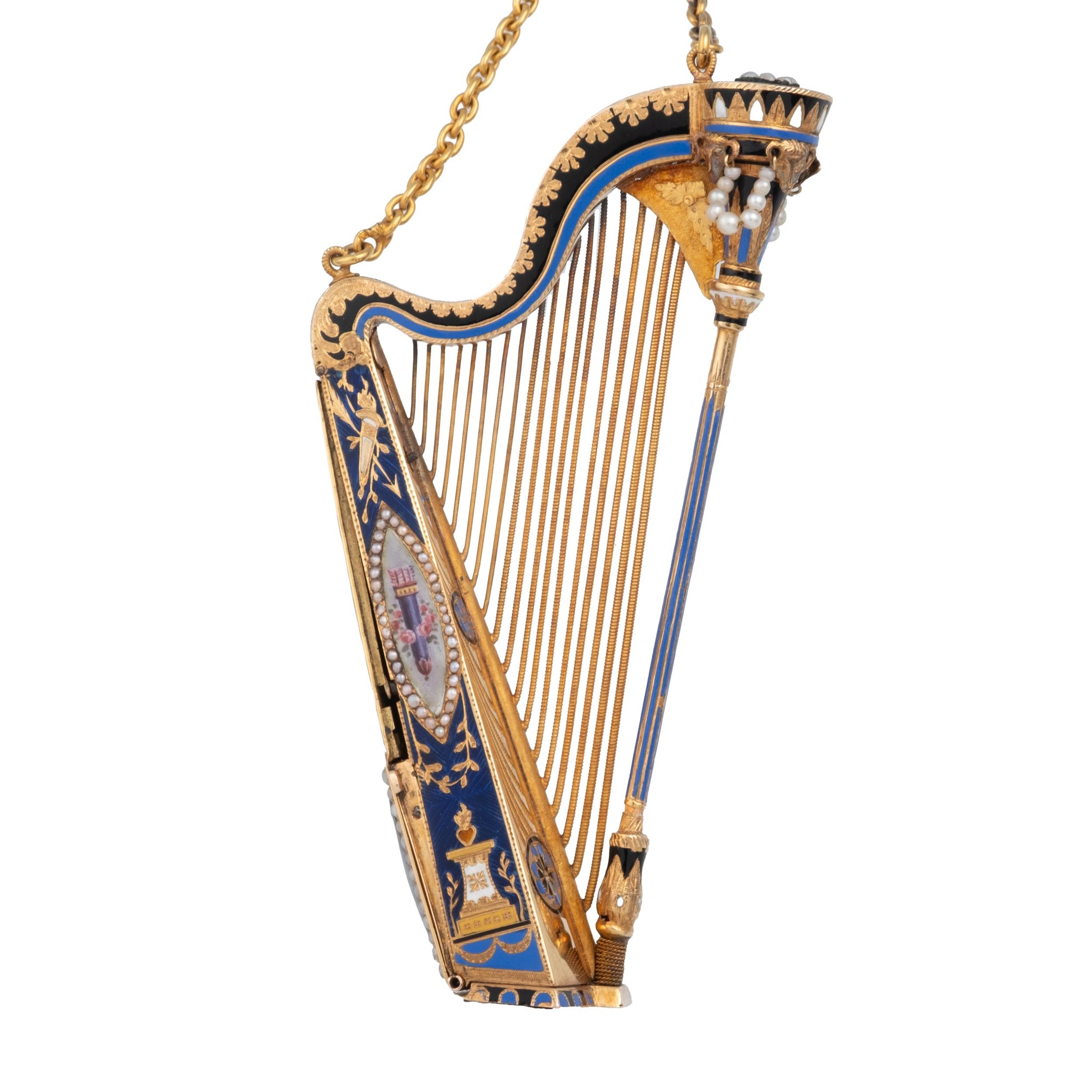
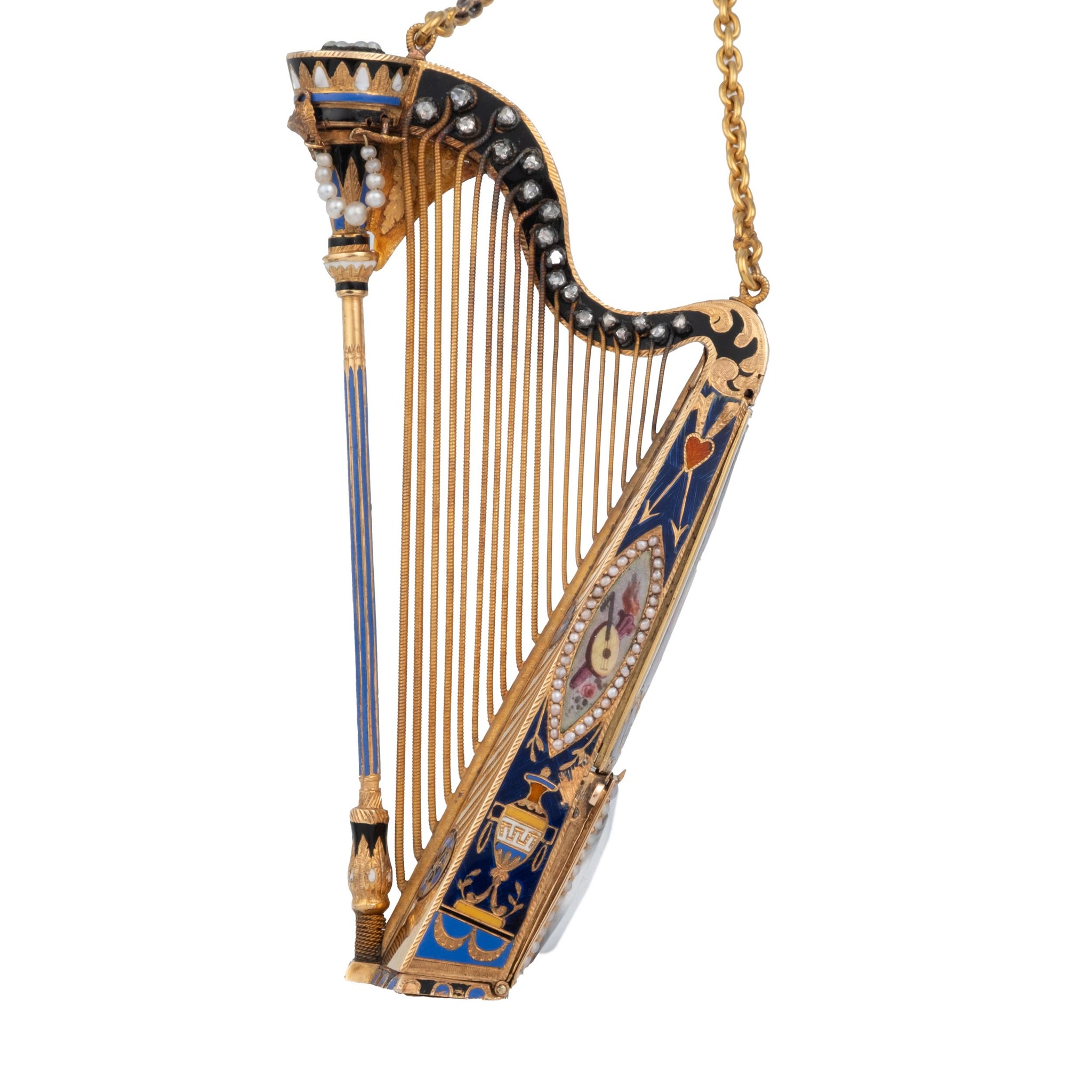
An exceptional and very rare gold, enamel, pearl and diamonds set, manual wind musical pendant watch in the form of a harp. The front of the soundboard finely painted in enamel depicting classical pastoral trophies, including a sun hat, quiver of arrows, bow, floral garland and ribbon. The watch set below within a pearl-set frame, with a white enamel dial, Arabic numerals and outer minute track. Blued steel “spade” hands. One side of the column decorated in translucent Imperial blue enamel over flinqué with a quiver of arrows, the opposite side with a central medallion depicting a mandolin, surrounded by a border of split pearls. Enamelled column with ornate capital and pearl swags, with gold twisted-rope strings and diamond-set tuning pegs.


Grading System
Grade:
Case: 3-24

Good

Slightly chipped

Movement: 3*

Good

Overhaul recommended, at buyer's expense

Dial: 3-72-01

Good

ENAMEL AND VARIOUS TYPES OF DECORATION Chipped winding aperture

HANDS Original

Brand Attributed to Piguet & Capt., Switzerland

Year Circa 1805

Caliber Trapezoidal, 18 x 17 mm, frosted gilt full-plate with cylindrical pillars, fusee and chain, verge escapement brass balance with flat balance spring, continental cock. Musical: barillet type with seven stacked tuned vibrating blades, five-wheel train, eccentric bushing speed regulating.

Length 66

Height 83

Width 21

Weight 45 mm.

Signature Movement signed Piguet et Capt

Notes

A similar harp is in the Historisches Museum in Basel, inv. 1982.1050. Piguet & Capt. Isaac Daniel Piguet (1775 - 1841) and Henry Capt (1775 - 1841) were partners from 1802 to 1811. They specialized in musical and automaton watches but also made very fine musical pieces with automata. Two small musical movements with five tuned teeth, playing tunes on five notes, were among their first, made in 1802. In 1811 Piguet became associated with Meylan, forming another famous firm, Piguet et Meylan.