Geneva, Nov 08, 2026
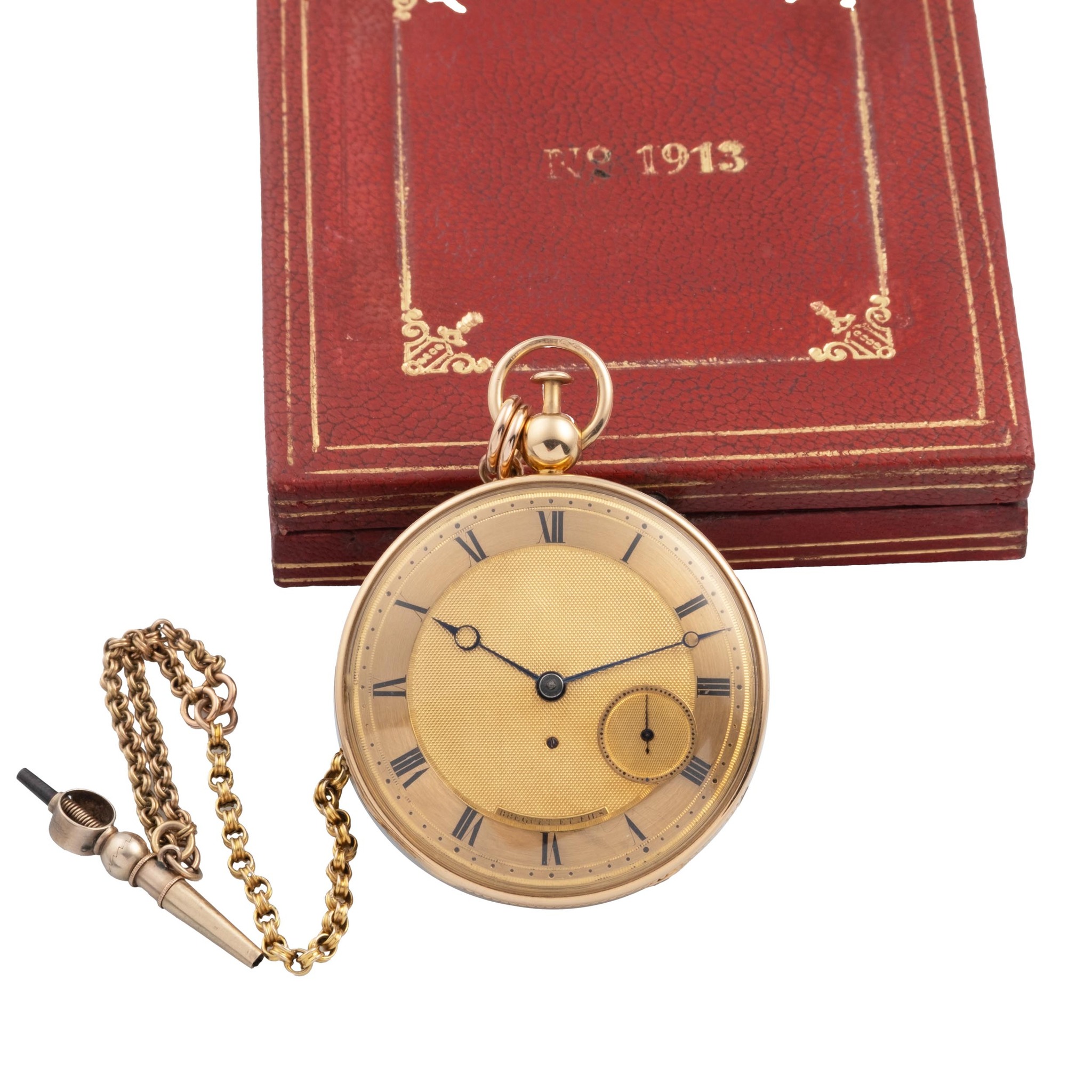
BREGUET & FILS, FRANCE, "4ÈME GRANDEUR", JUMPING-HOUR QUARTER-REPEATING POCKET WATCH WITH SINGLE-GONG STRIKE, 18K YELLOW GOLD
TO BE SOLD WITHOUT RESERVE
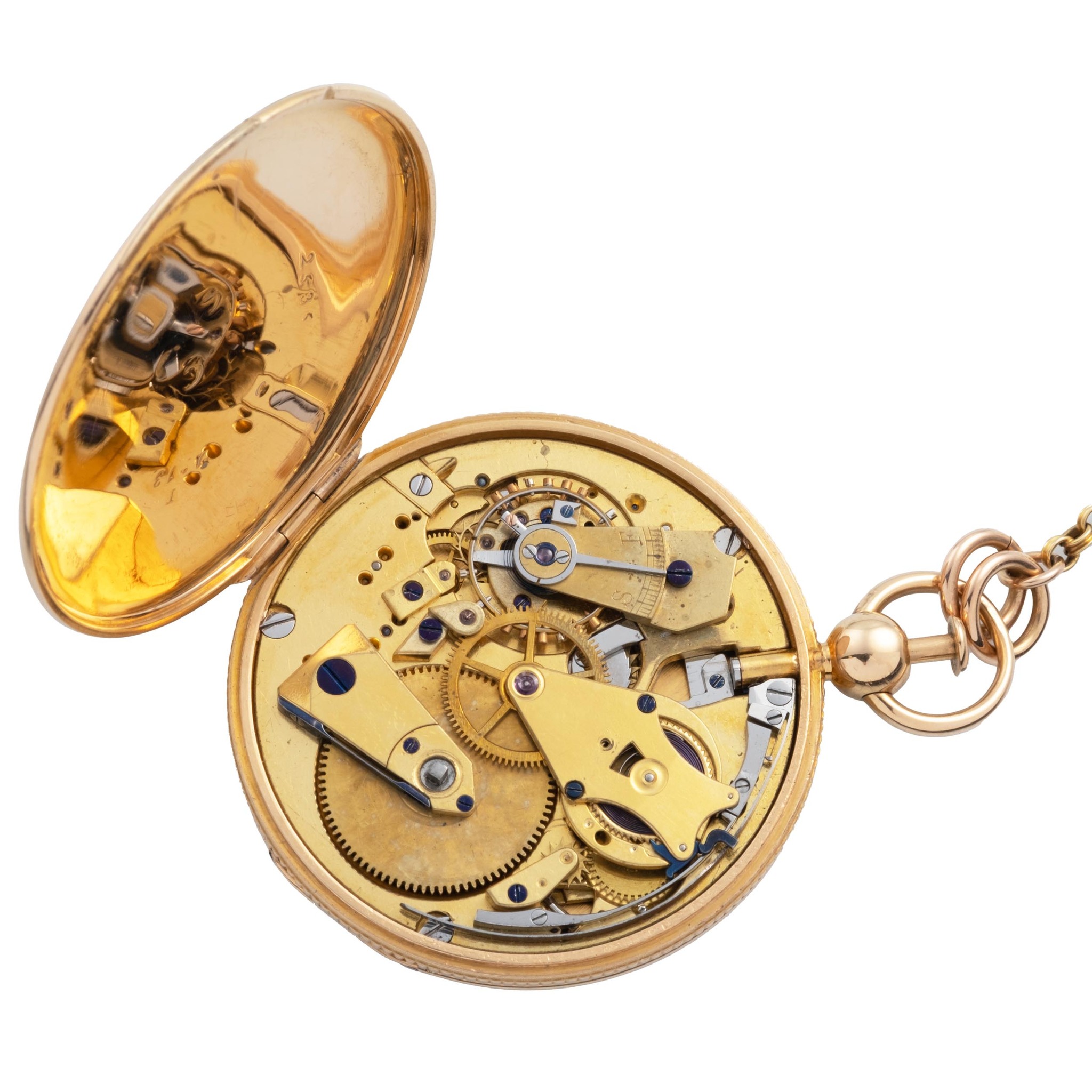
A very fine and very rare, 18k gold, manual wind open-face pocket watch. Engine-turned case by master casemaker Tavernier, with polished bezel and border, reeded band and hinged gold cuvette. Case back engine-turned in a radial pattern, centred by an engine-turned rosette. Gold engine-turned dial with polished chapter ring, radial Roman numerals and outer minute track with dot markers; eccentric subsidiary seconds between 3 and 4 o’clock. Blued steel Breguet hands.
| Grading System | |
|---|---|
Grade: AAA |
Excellent |
Case: 3-8 |
Good Slightly scratched |
Movement: 3-6* |
Good Slightly oxidized Overhaul recommended, at buyer's expense |
Dial: 3-01 |
Good HANDS Original |
Brand Breguet & Fils, France
Model "4ème grandeur"
Year Sold to Lord Lauderdale the 24 february 1807 for 2760 Francs
Movement No. 1913
Case No. 2535 by Tavernier
Caliber 39 mm., gilt brass bridge calibre, jewelled to the centre, with lateral counterpoised ruby lever escapement (later), cut-bimetallic compensation balance with flat balance spring. Breguet-type repeating work striking with a single hammer through an intermediary block on a single short rectangular gong, activated by a pull-and-twist piston in the pendant.
Diameter 43 mm.
Weight 66 gr.
Signature Dial, case and movement
Accessories Accompanied by the original box, ratchet key and original Breguet gold chain.