Important Modern & Vintage Timepieces
Hong Kong, Nov 30, 2025
LOT 337
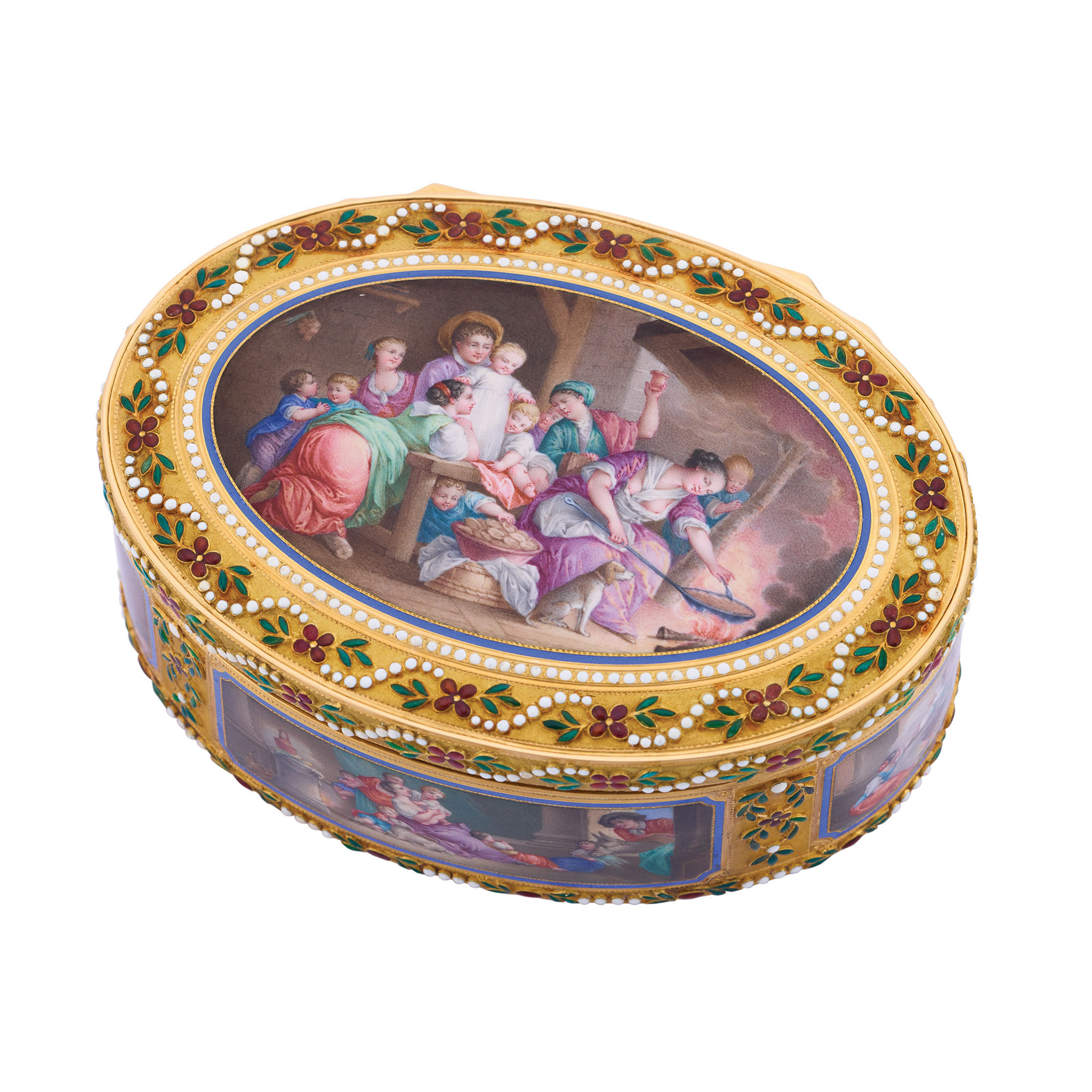
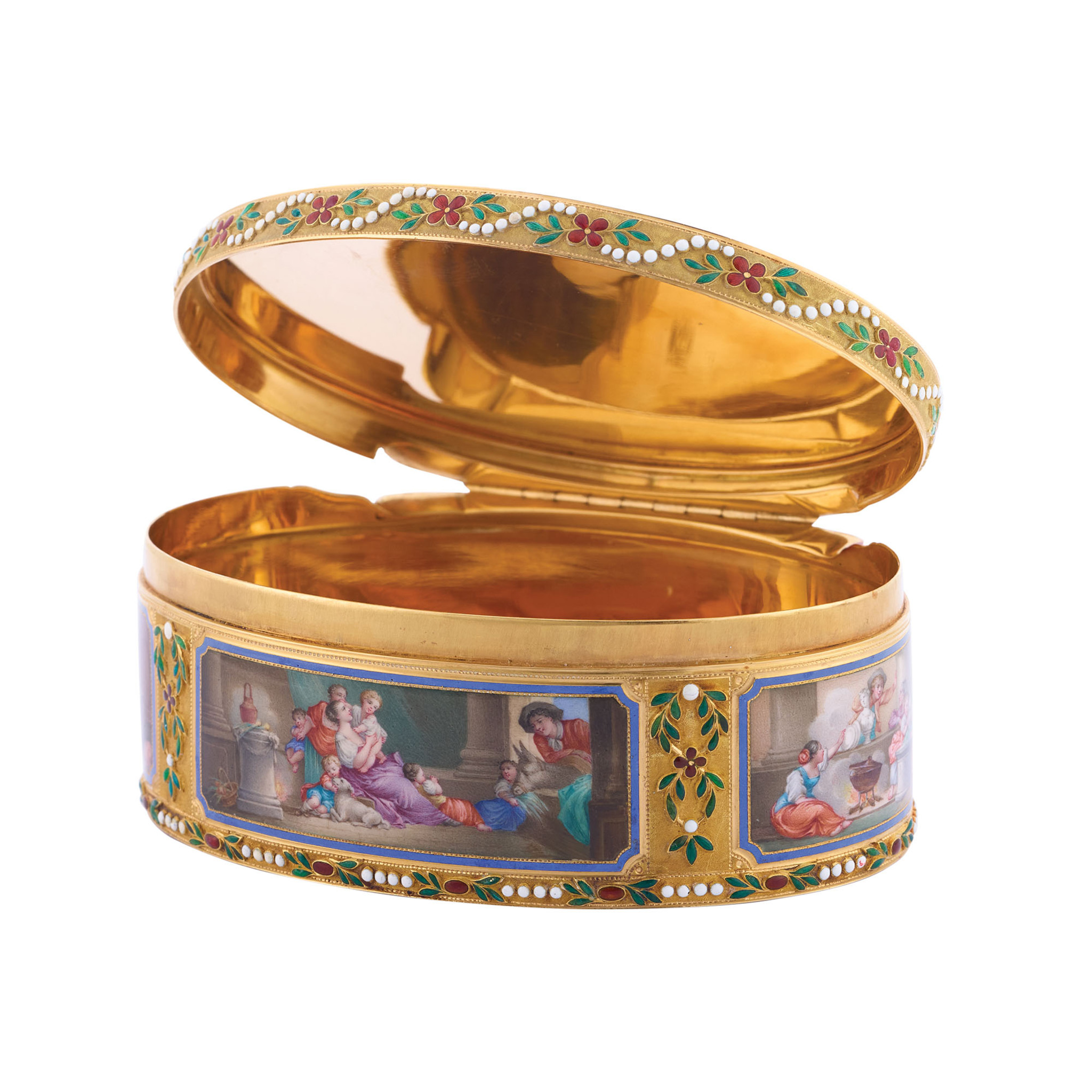
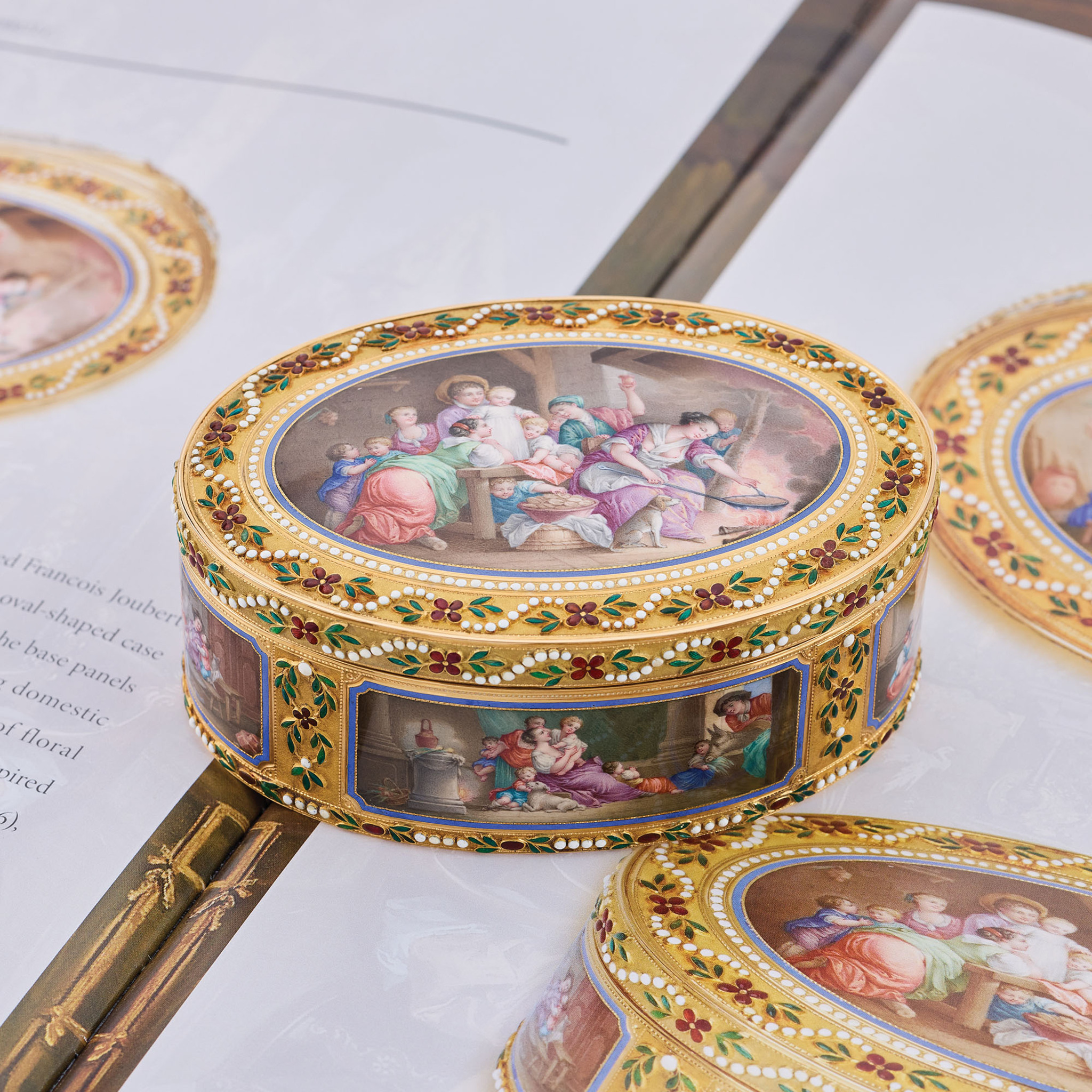
FRANCOIS JOUBERT, TABATIERE - SNUFF BOX, GOLD AND ENAMEL
HKD 200,000 - 400,000
EUR 22,300 - 44,500 / CHF 20,800 - 41,500 / USD 25,800 - 52,000 / JPY 3,970,000 - 7,940,000
Sold: HKD 250,000
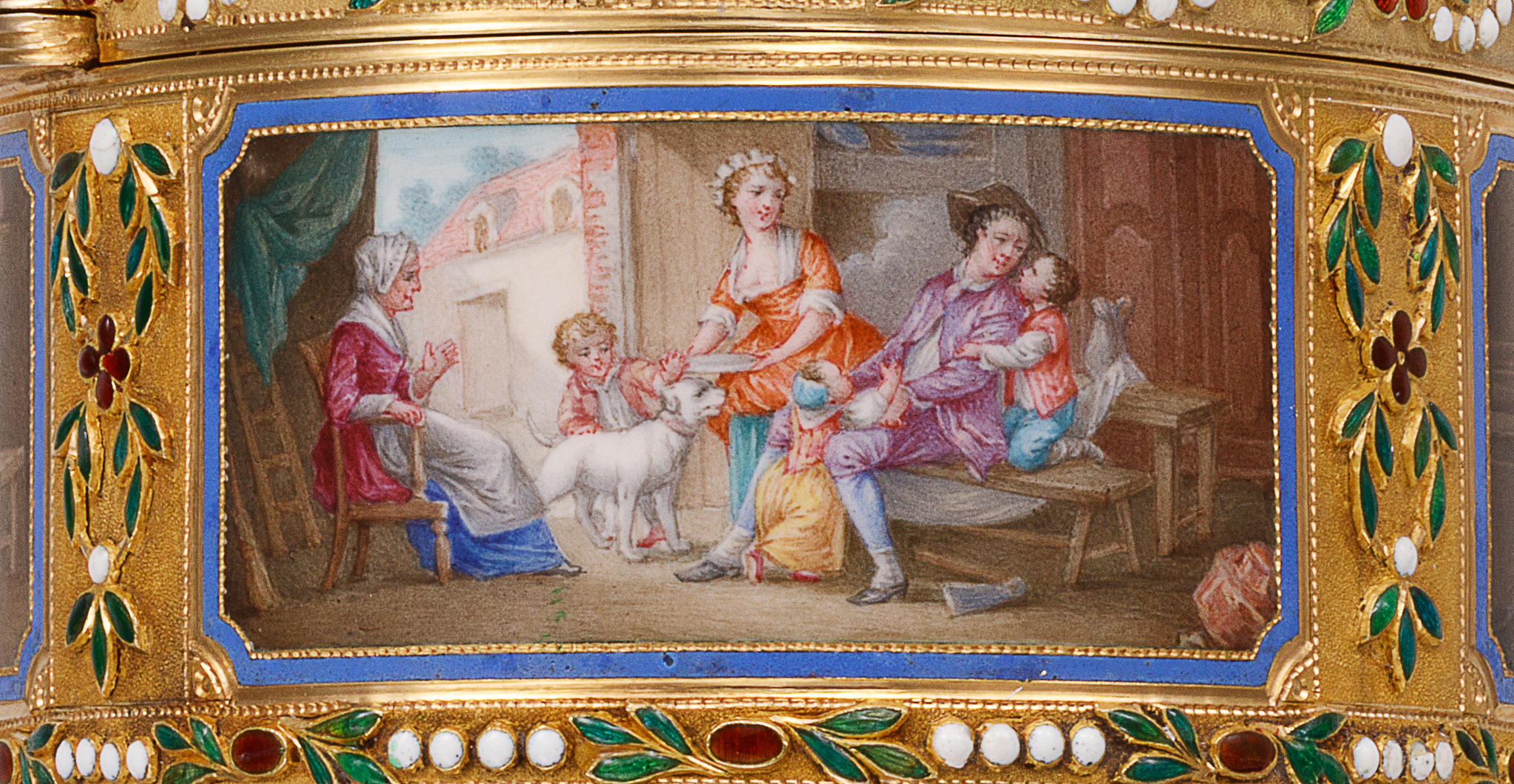
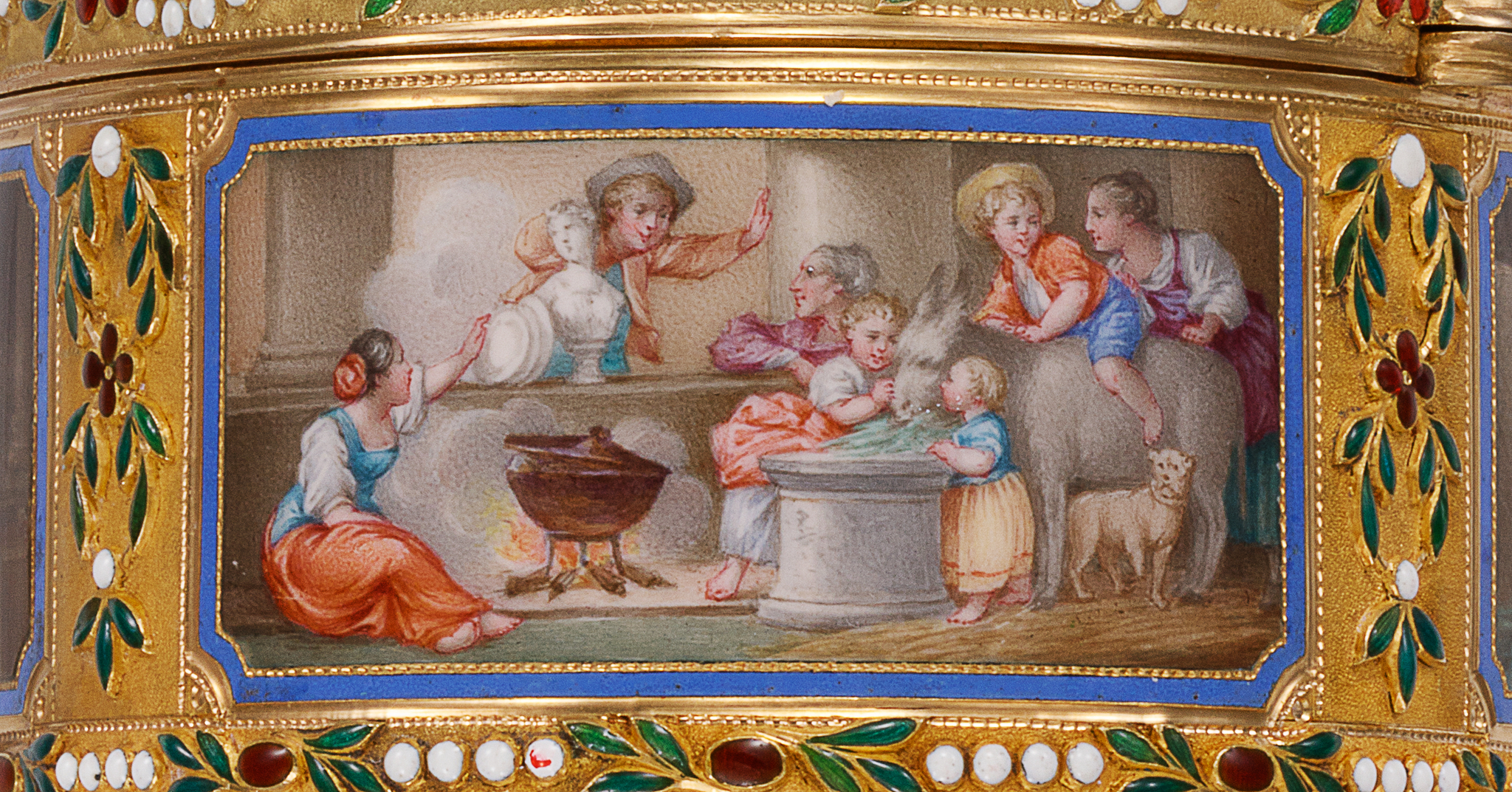
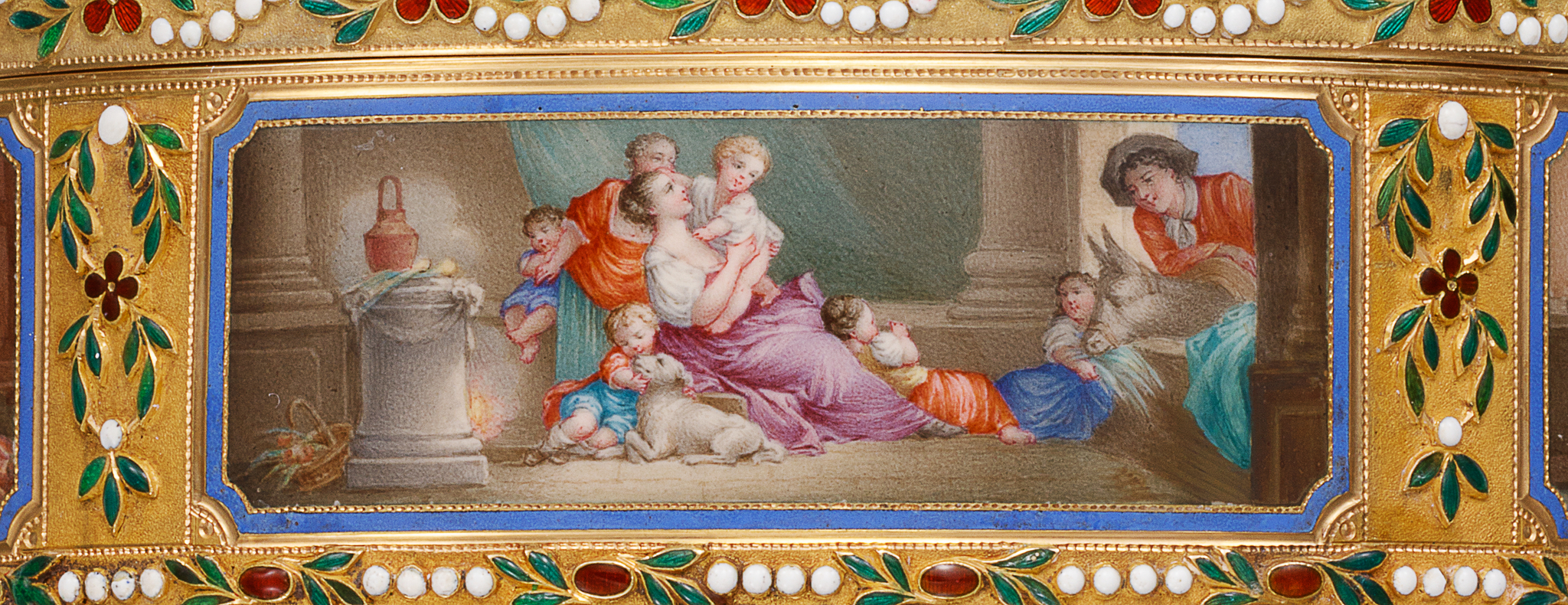
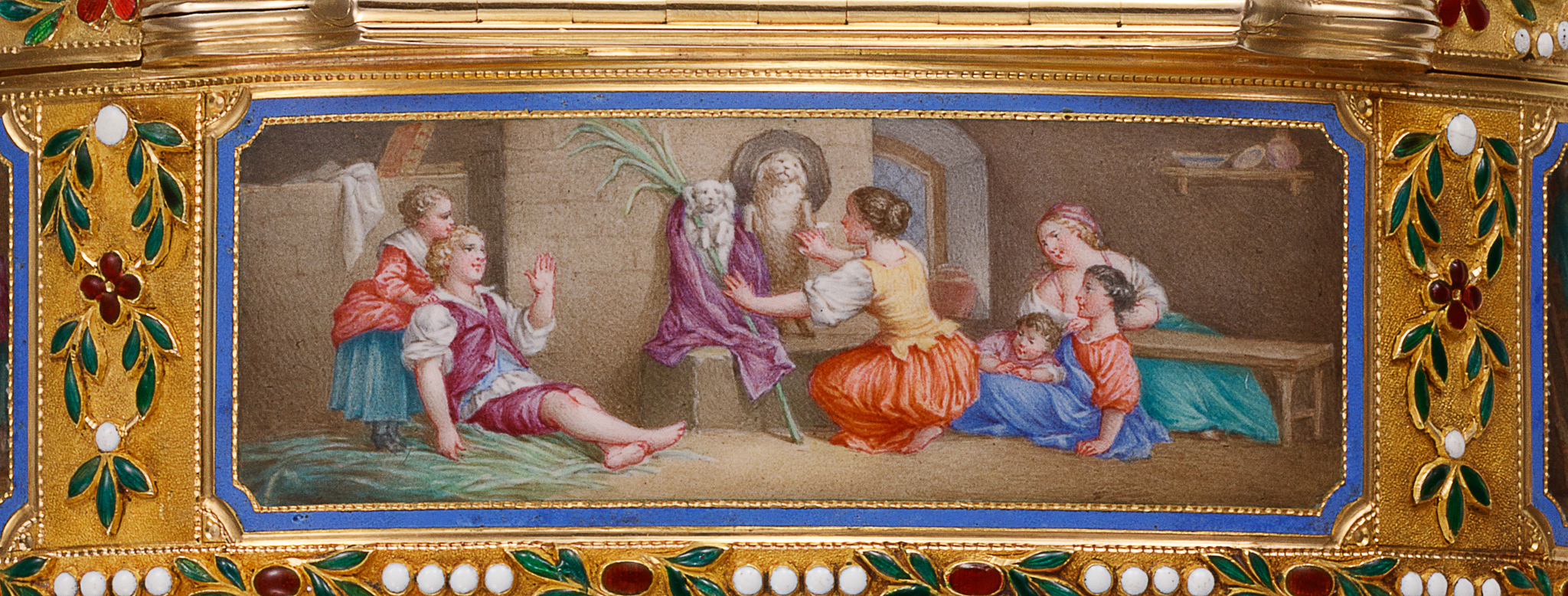
A This elegant oval-shaped snuff box is crafted from gold and enamel, featuring a hinged lid with matching decoration on the base and band. The lid, sides, and base panels are adorned with enamel paintings on gold, depicting intimate domestic genre scenes framed by a floral scroll enamel border. The central motif draws inspiration from a composition by Jean-Honoré Fragonard (1732–1806), including one of the side scenes titled «The Happy Family.» The remaining scenes appear to be artistic interpretations of other compositions. This snuff box, notable for its exquisite proportions, is preserved in an exceptional state.




| Grading System | |
|---|---|
Grade: |
|
Case: 3-8 |
Good |

Brand Francois Joubert
Year circa 1761-1762
Length 68mm
Height 38mm
Width 91mm
Weight 240gr. (approx.)
Signature case
Notes
The piece is attributed to François Joubert, who was recognized as a Master goldsmith in 1749. Joubert is renowned for his elaborate silver sauceboat (saucière) dated 1754–1755, bearing the arms of Madame de Pompadour, the favored consort of King Louis XV, currently housed in the Musée des Arts Décoratifs in Paris (Inv. 26 908 A). Although boxes by PierreAymé Joubert, a Master since 1735, have been documented, records indicate he ceased his business activities around 1763. His relationship to François Joubert remains unclear, but the present snuff box may suggest a succession, possibly as his son. Additionally, Jean-Antoine Joubert, likely François’s son, apprenticed in 1760 and became a Master goldsmith in 1777, known for his elegantly guilloché engine-turned gold boxes. He was active in Paris for at least a decade from 1781. For further reference, see Serge Granjean’s Catalogue des tabatières, boîtes et étuis des XVIIIe et XIXe siècles du musée du Louvre (Paris, Editions de la Réunion des musées nationaux, 1981), p. 117.