William Ilbery (circa 1760-1839)
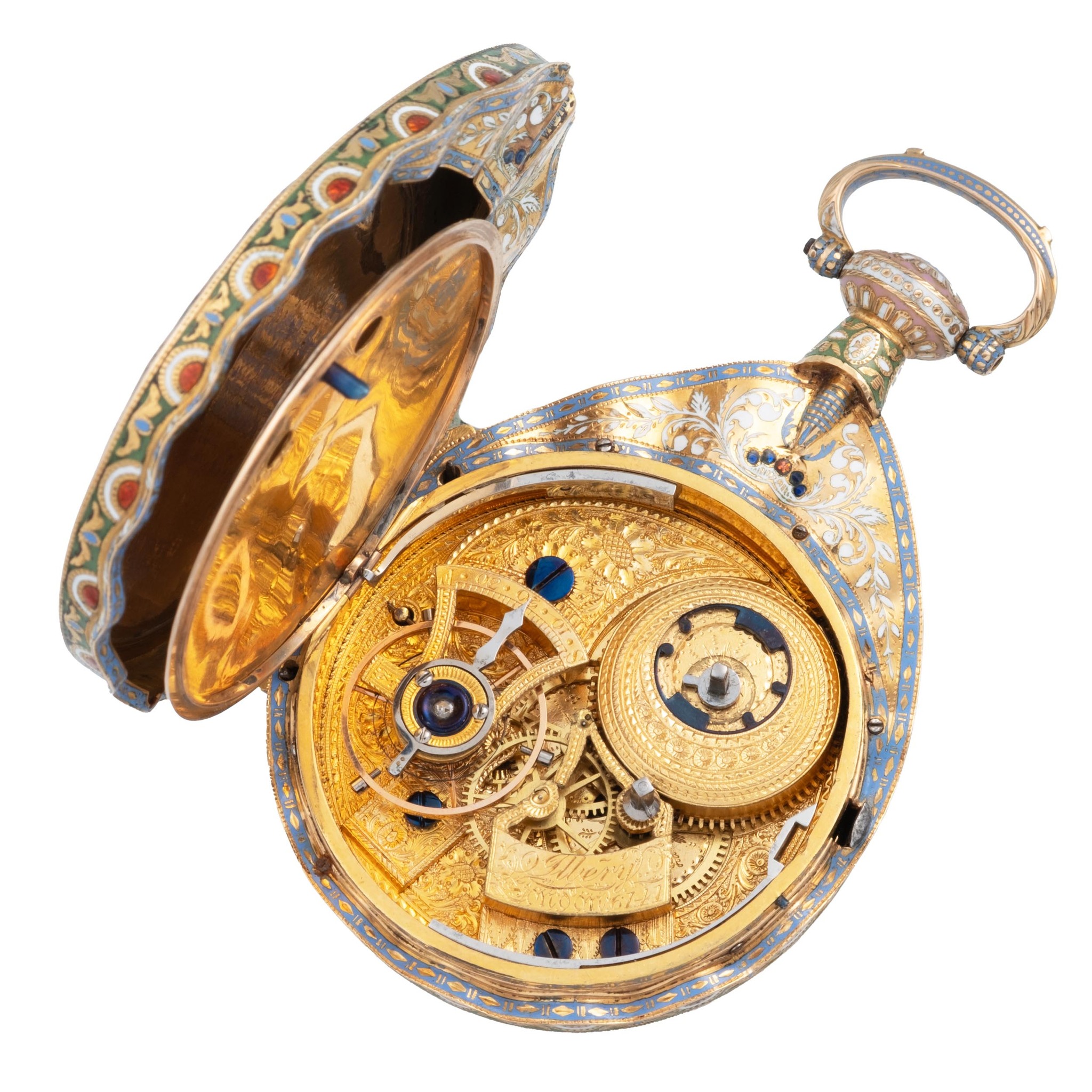
Active in London from 1780, William Ilbery specialized in luxury watches made for the Chinese market, following the pioneering work of James Cox in London and Jaquet Droz in Switzerland. His early production was in the English style, with full-plate movements and English-type single-wheel duplex escapements. For his highest-quality watches, however, he incorporated spring-detent escapements.
The cases were in the style of those produced in England at the time. Later, alongside Jaquet Droz’s Swiss production signed in London and the work of William Anthony, who was active in London, Ilbery’s movements were increasingly inspired by the Lépine calibre, with its free-standing barrel. He thereby established a new standard for watches made for the Asian market.
Ilbery had profusely engraved movements produced in Switzerland, principally in Fleurier. He was followed in this practice by makers such as Bovet and Juvet. Bovet and Juvet later organized the mass production of silver-cased watches and, once their Canton workshops were established, assembled them in China. Ilbery can therefore be considered the “father” of the Chinese watches as they are known today.
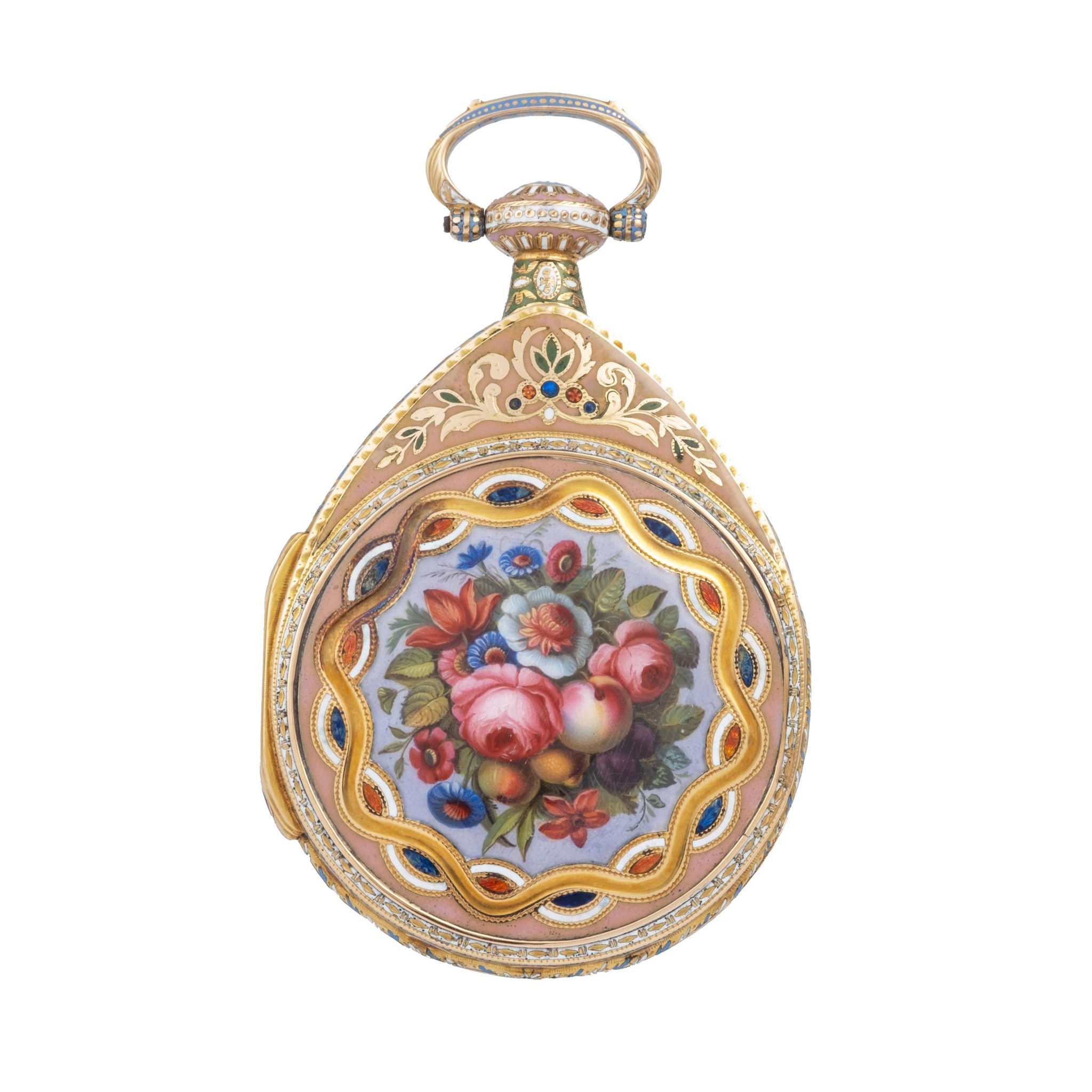
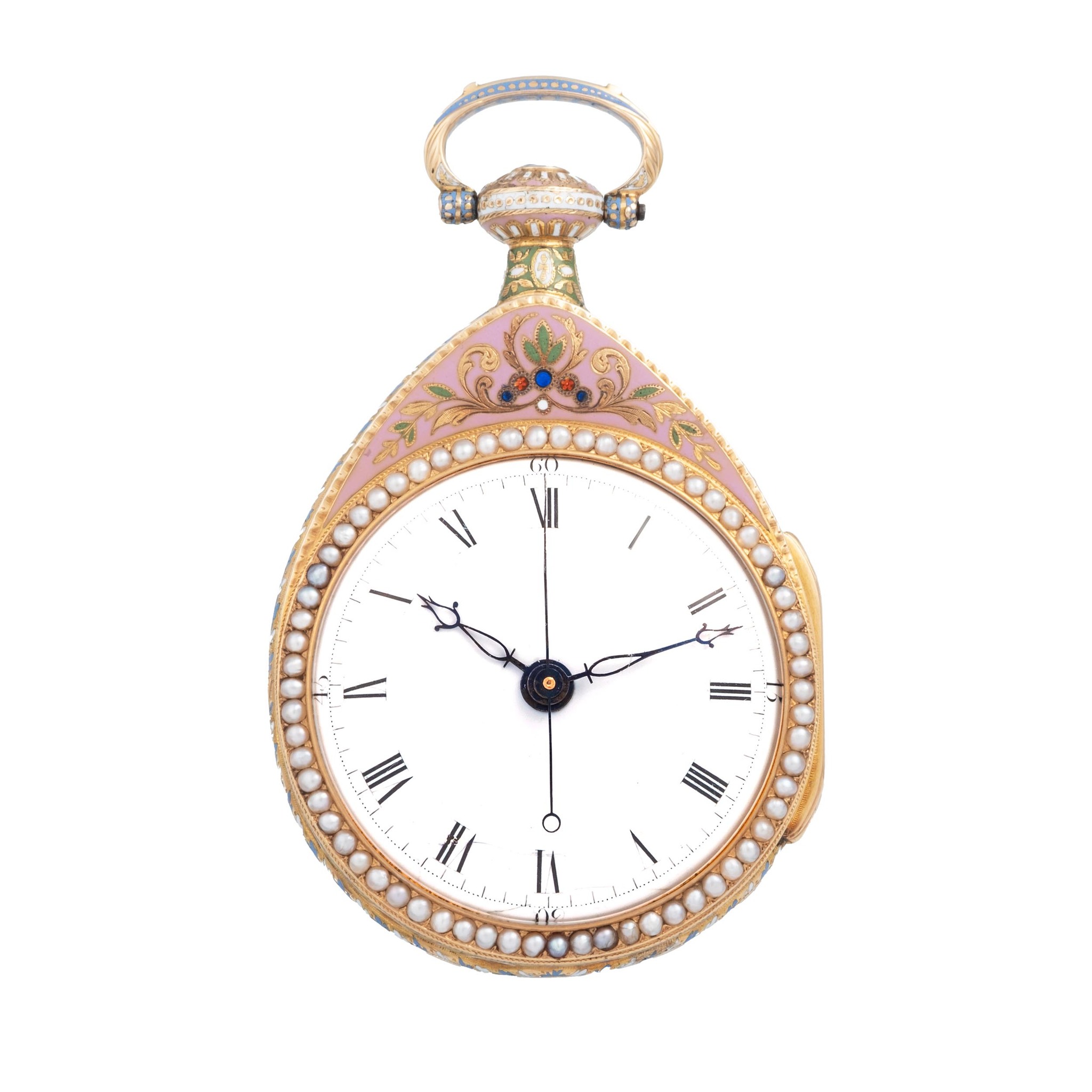
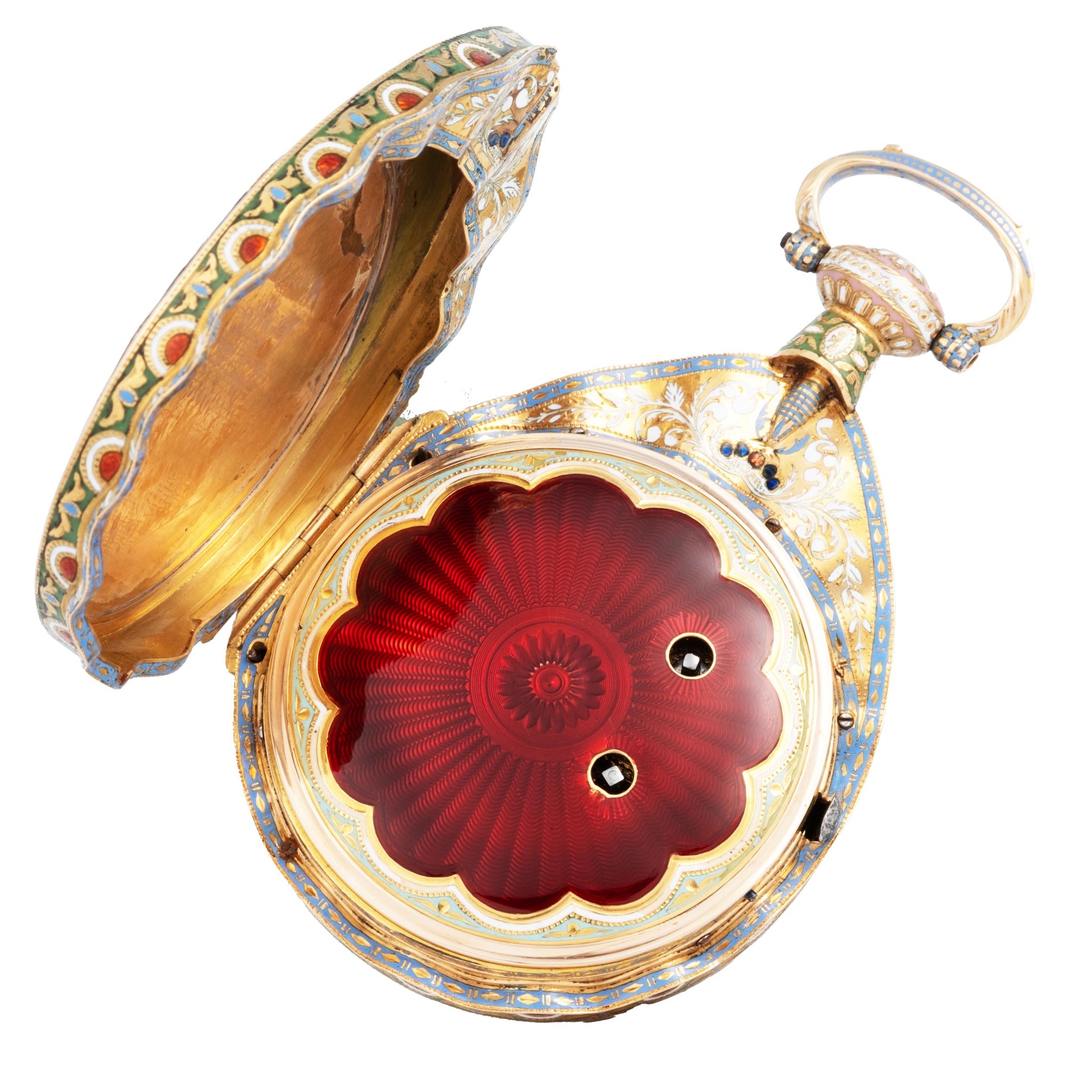
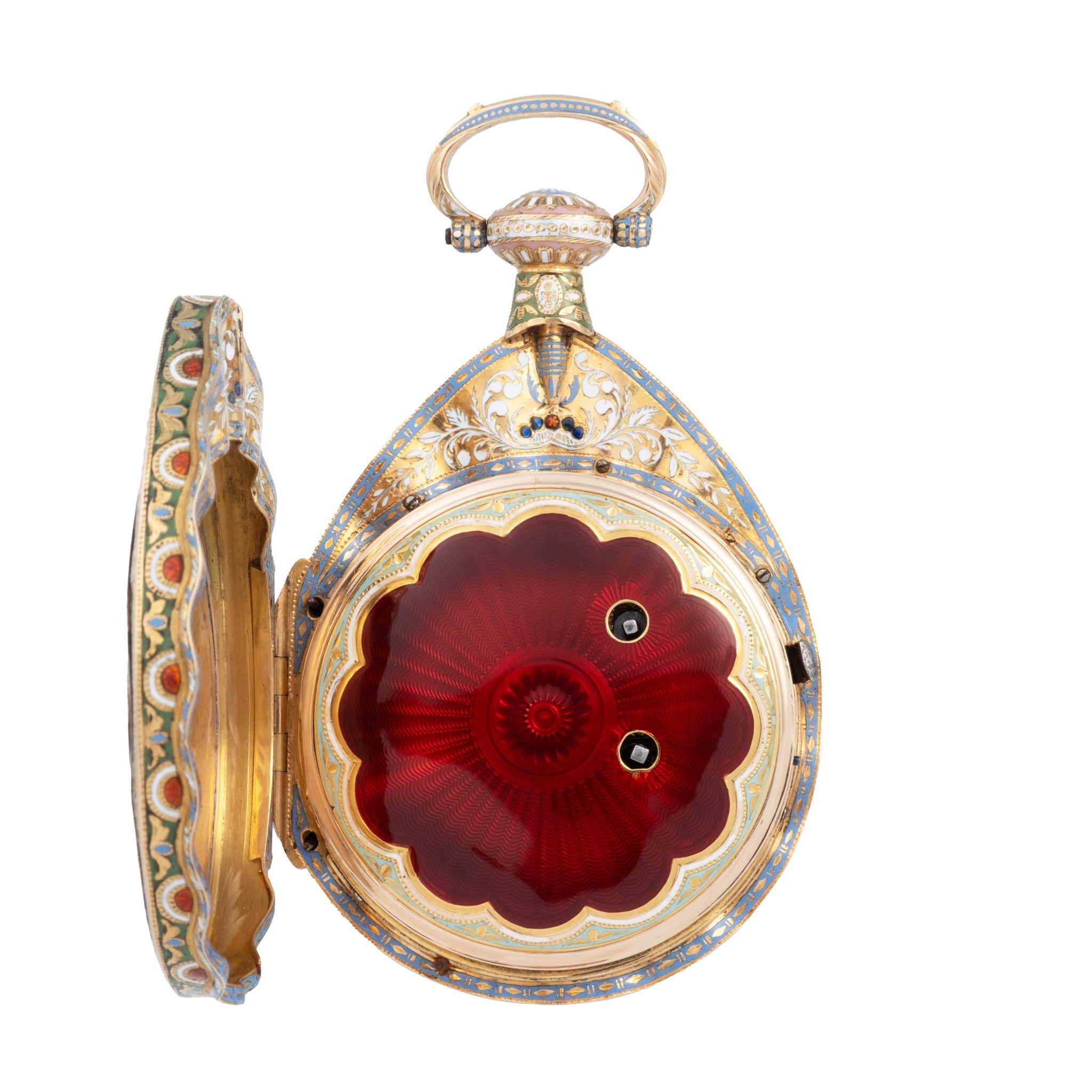
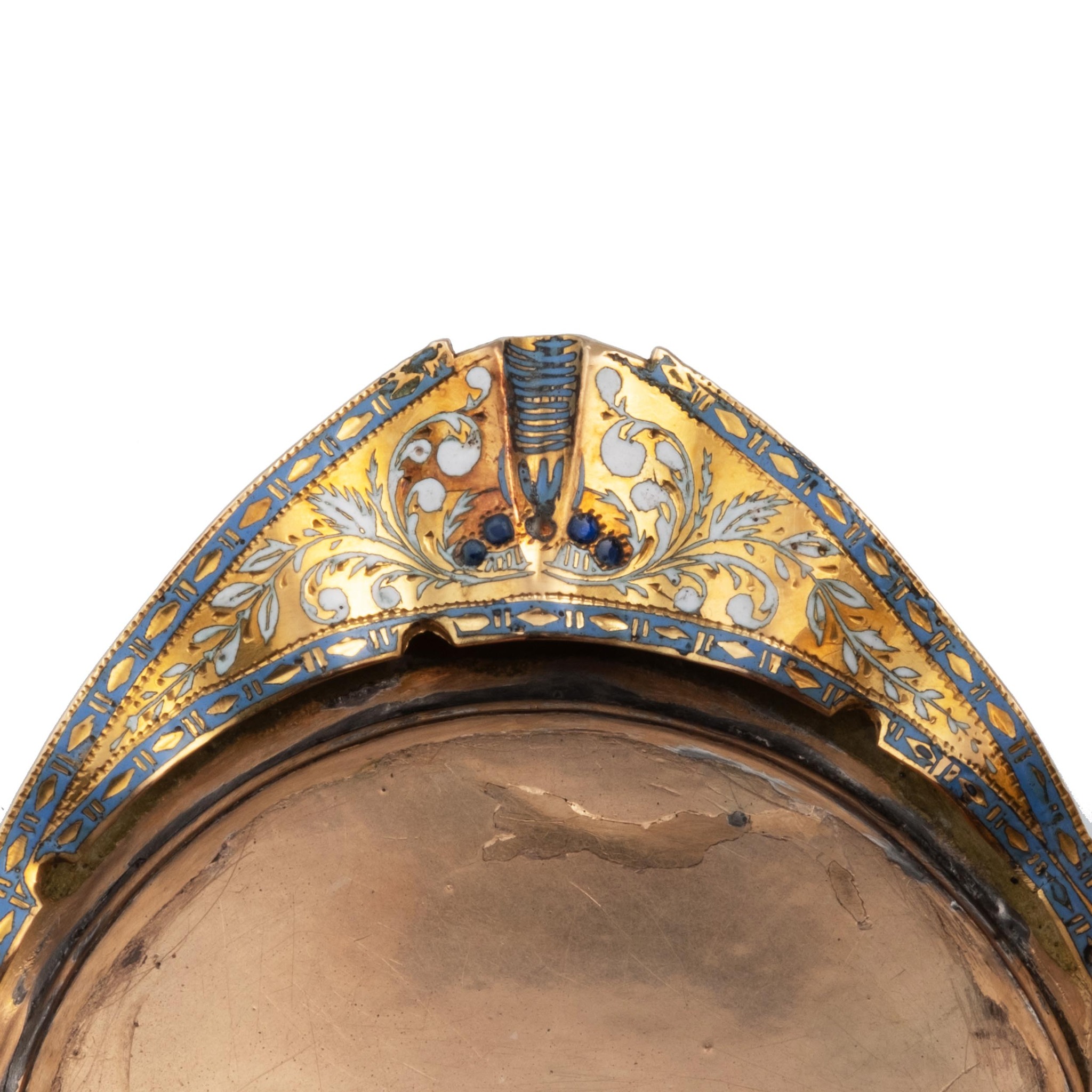
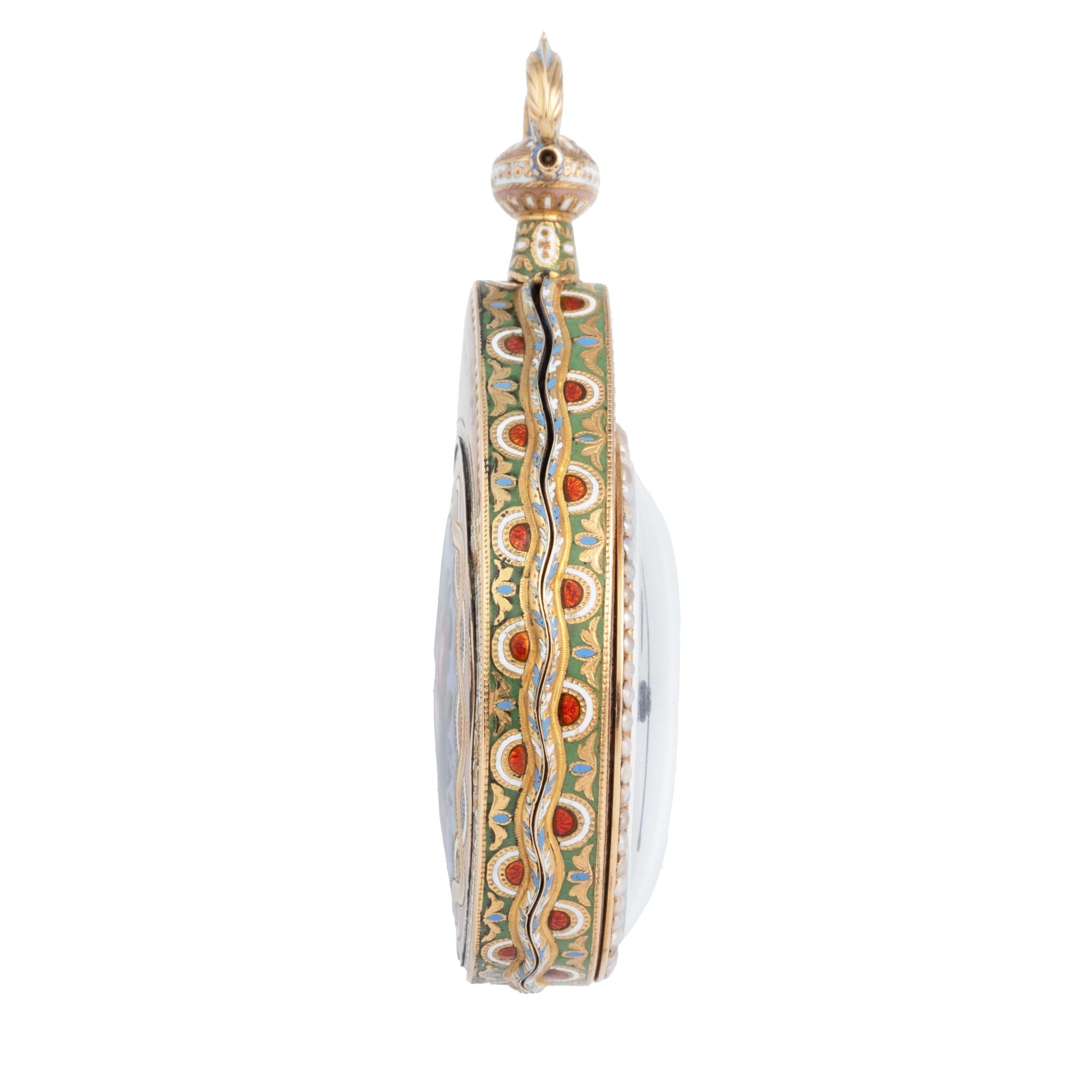
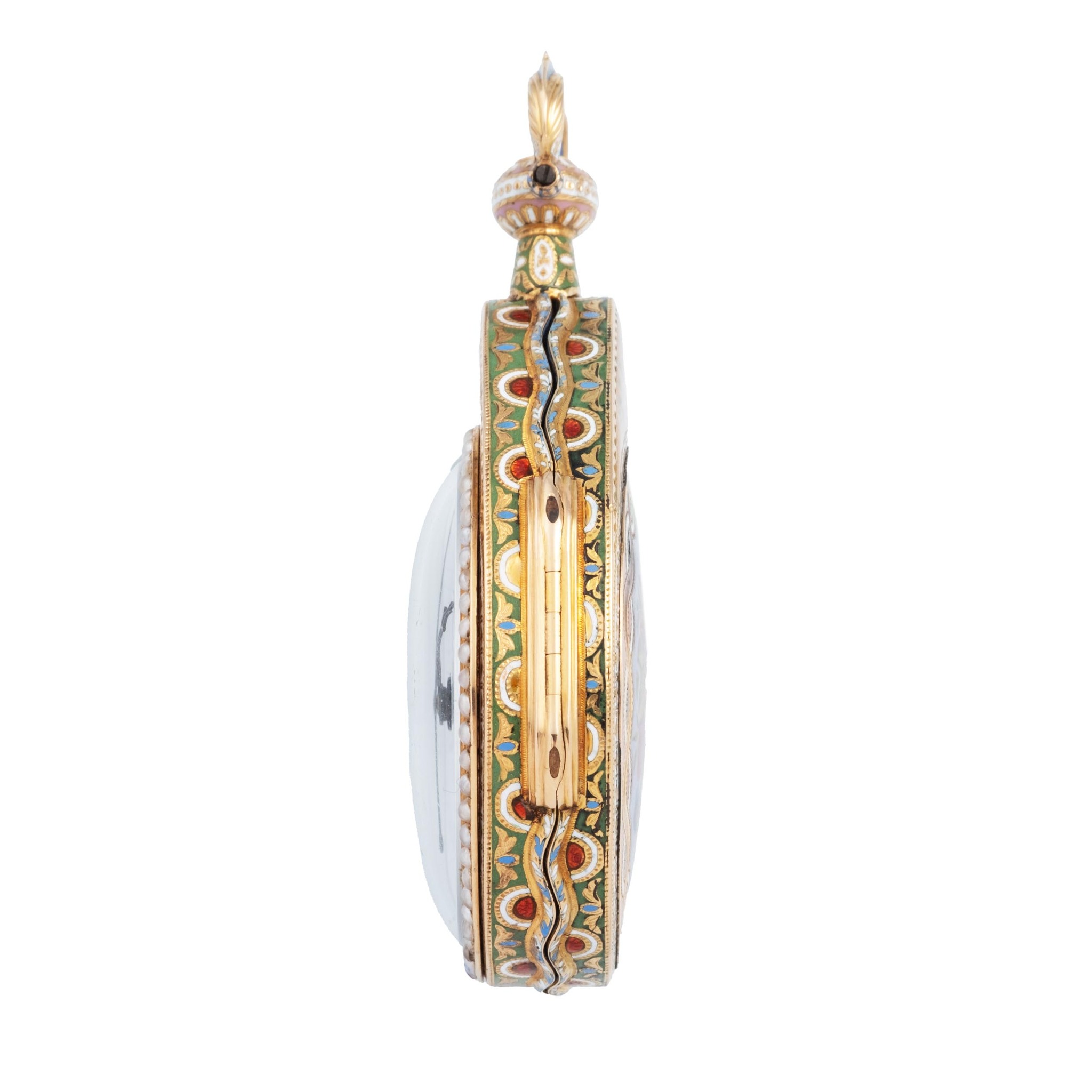
Ilbery’s watch cases were decorated by some of Geneva’s finest enamellers, including Jean-François-Victor Dupont and Jean-Louis Richter. He appears to have maintained close contacts with the continental trade, as evidenced by a watch signed “Ilbery Paris”. Ilbery & Son are also recorded in London and Fleurier, as well as in Canton.
“Chinese” watches were often sold in pairs and were therefore fitted in specially designed boxes. When such pairs of watches were enamelled, they were invariably painted in a symmetrical, opposing manner, like mirror images.