Antiquorum Auctioneers since 1974

Geneva, May 10, 2026

LOT 440

JAQUET DROZ, SWITZERLAND, AN EXCEPTIONAL AND POSSIBLY UNIQUE SIGNED COACH WATCH, PROBABLY FROM THE GENEVA WORKSHOP, MADE FOR THE CHINESE MARKET AND FITTED WITH A HIGHLY COMPLEX FOUR-TRAIN MOVEMENT INCORPORATING PETITE SONNERIE, FOUDROYANTE SECONDS, MUSICAL TRAIN AND ALARM, GILT BRASS, COLORED STONES AND ENAMEL., GILT BRASS, COLOR STONES AND ENAMEL

CHF 100,000 - 200,000

HKD 1,000,000 - 1,990,000 / USD 128,000 - 254,000 / EUR 110,000 - 218,000 / JPY 20,160,000 - 40,310,000

Sold: CHF 212,500

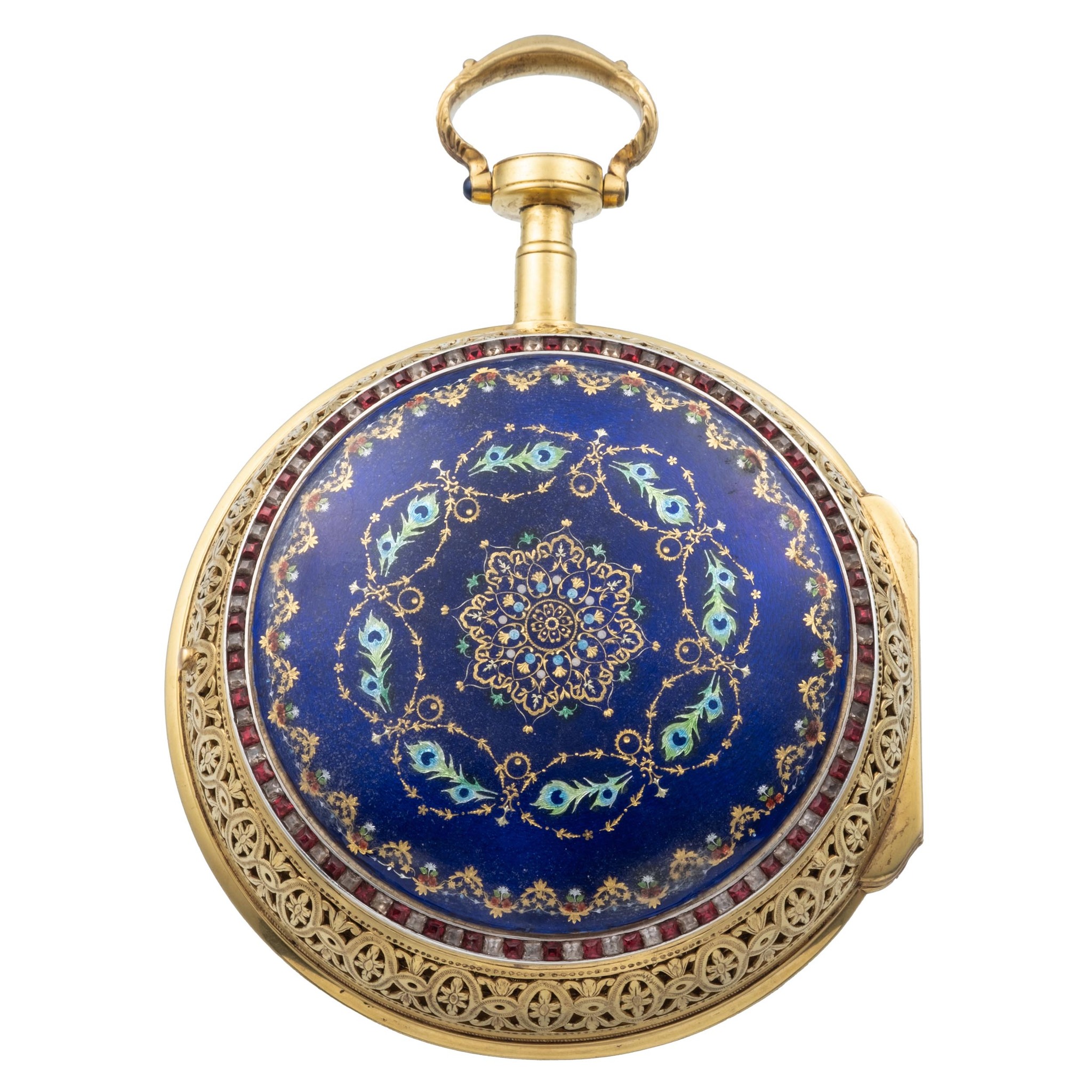
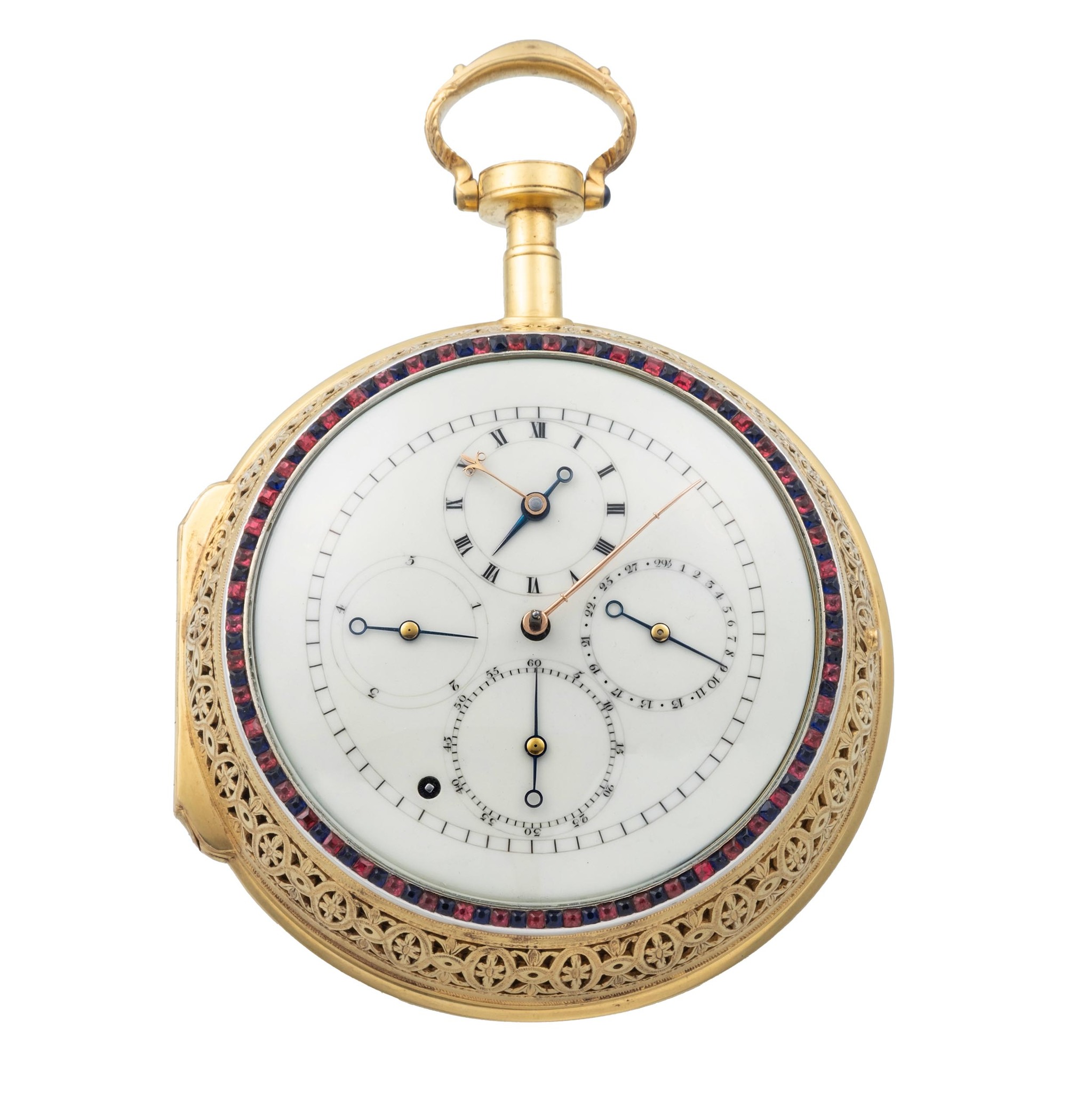
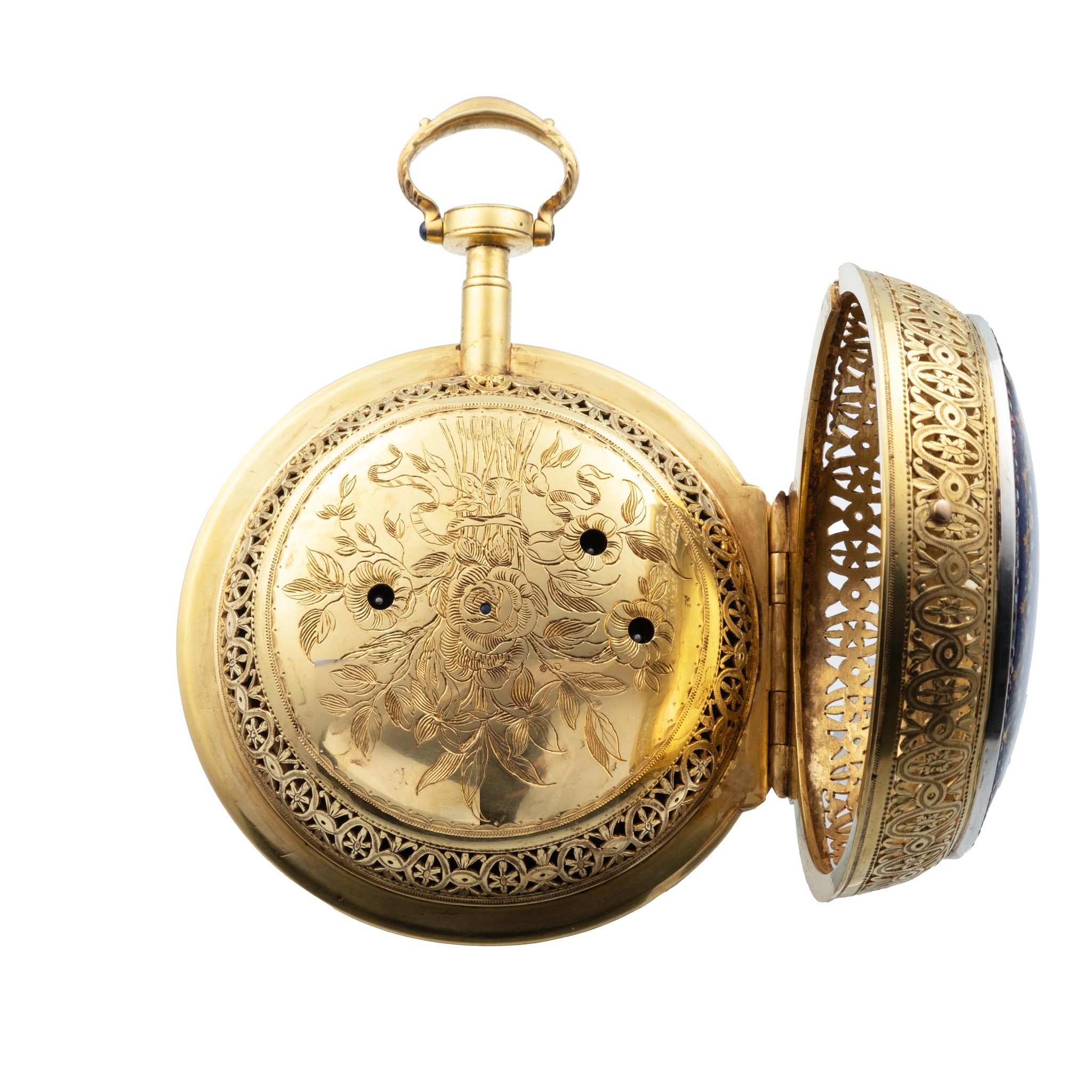
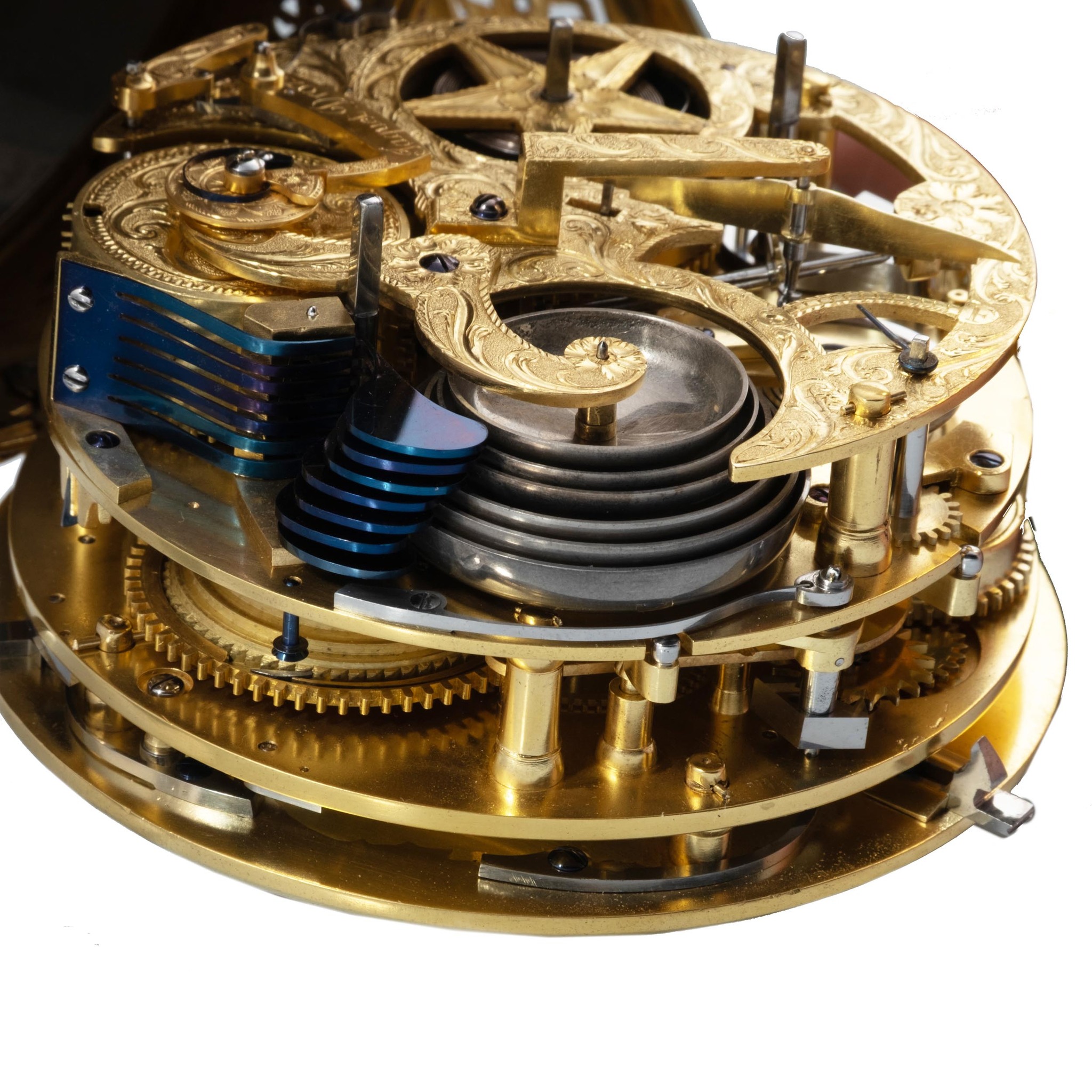
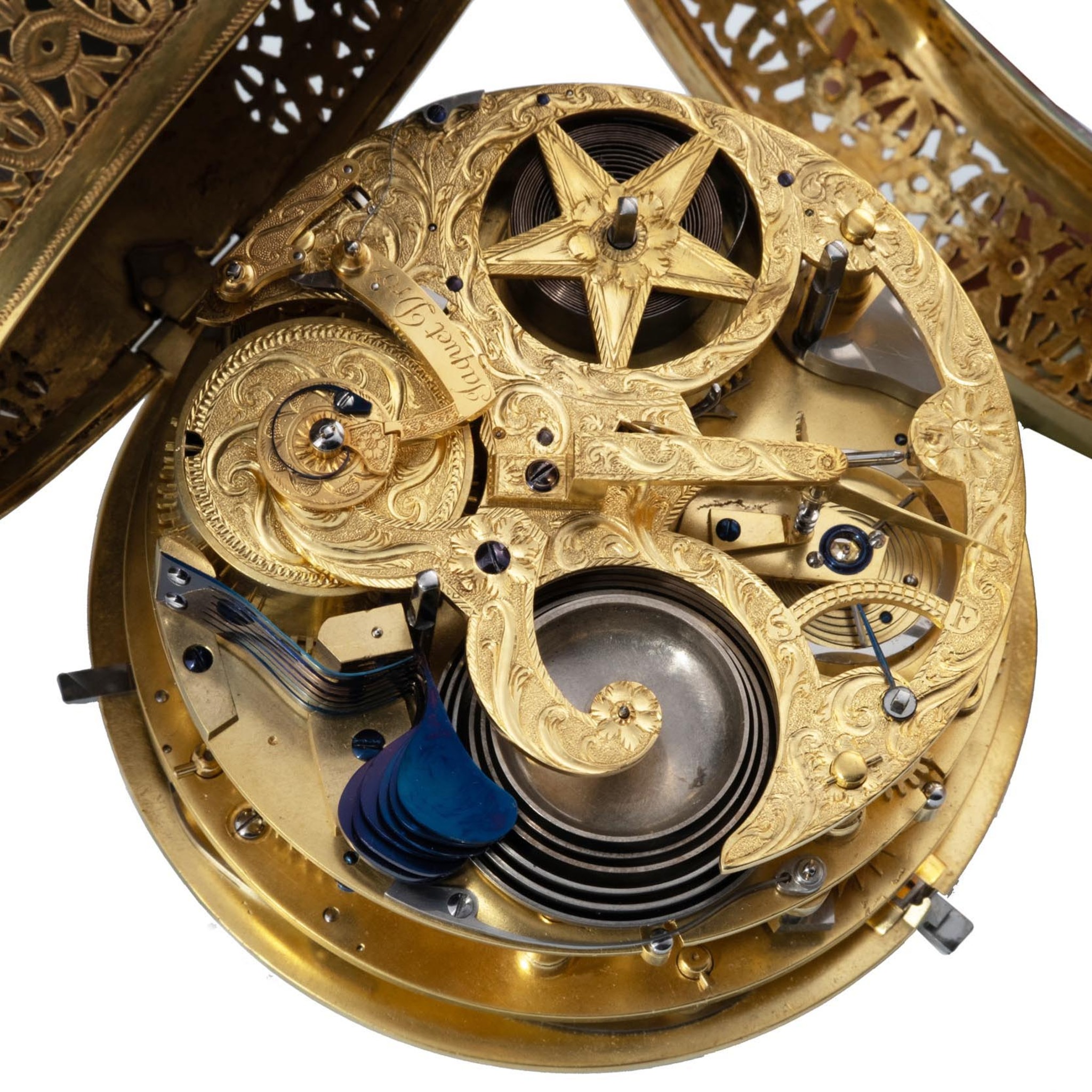
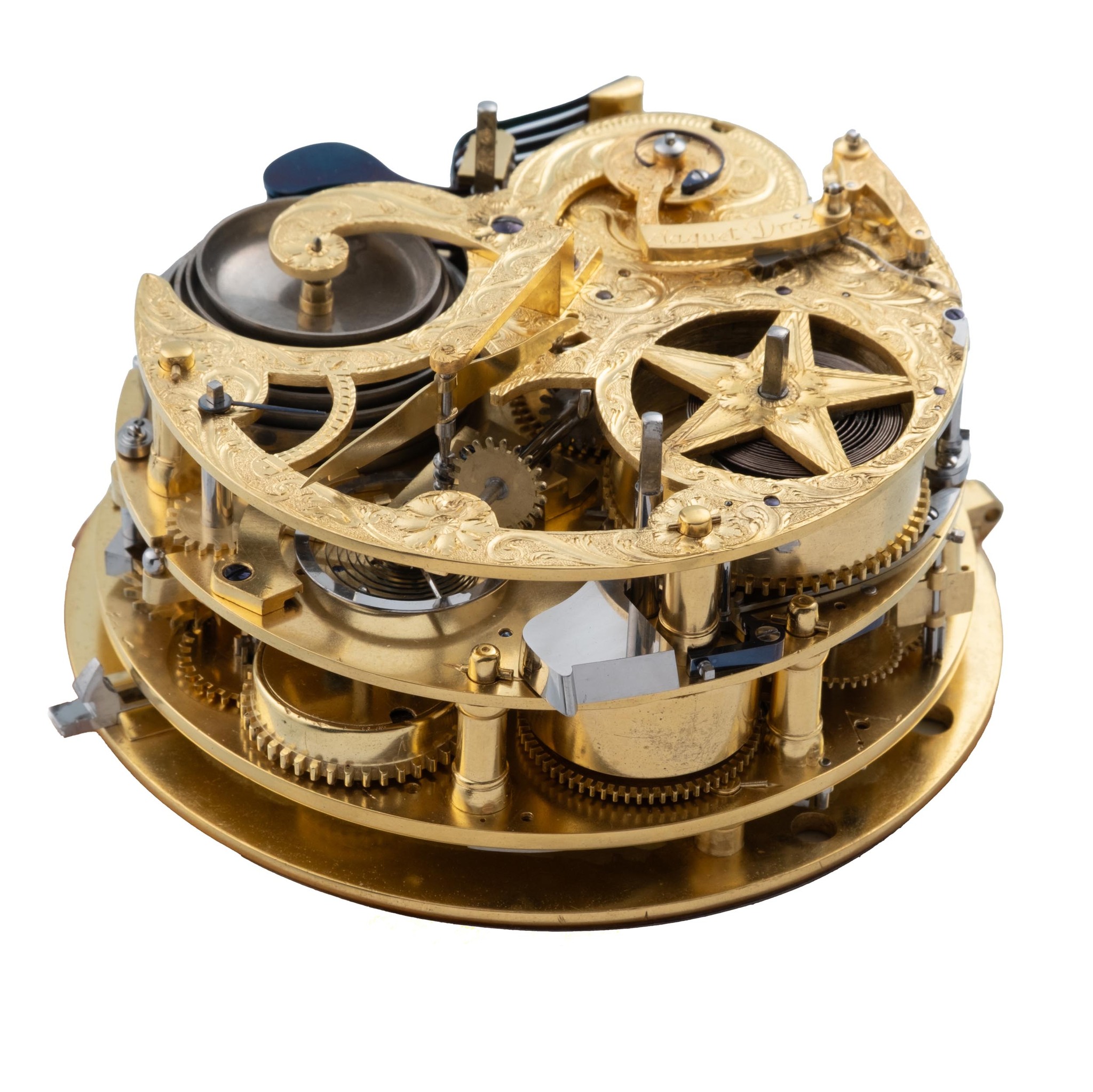
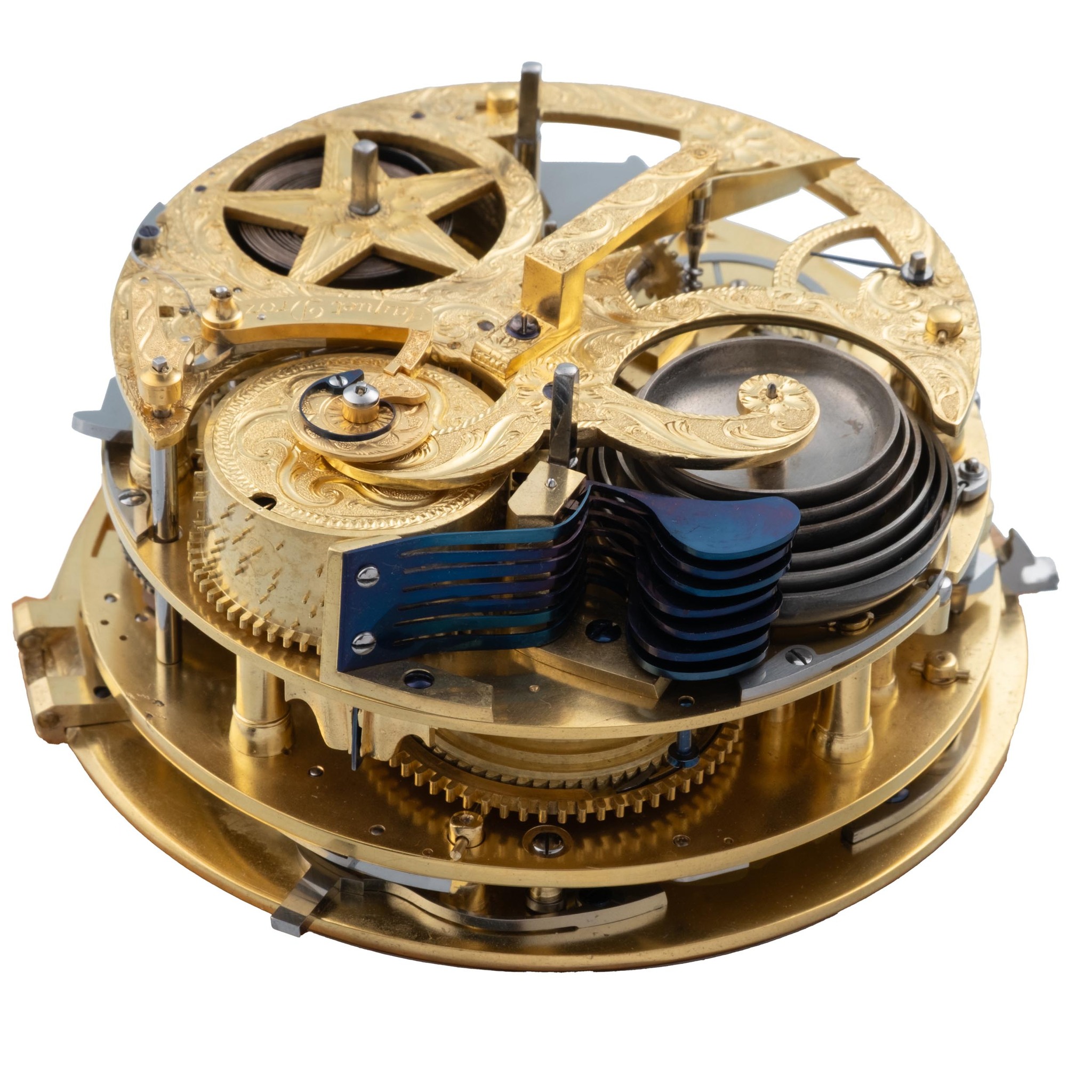
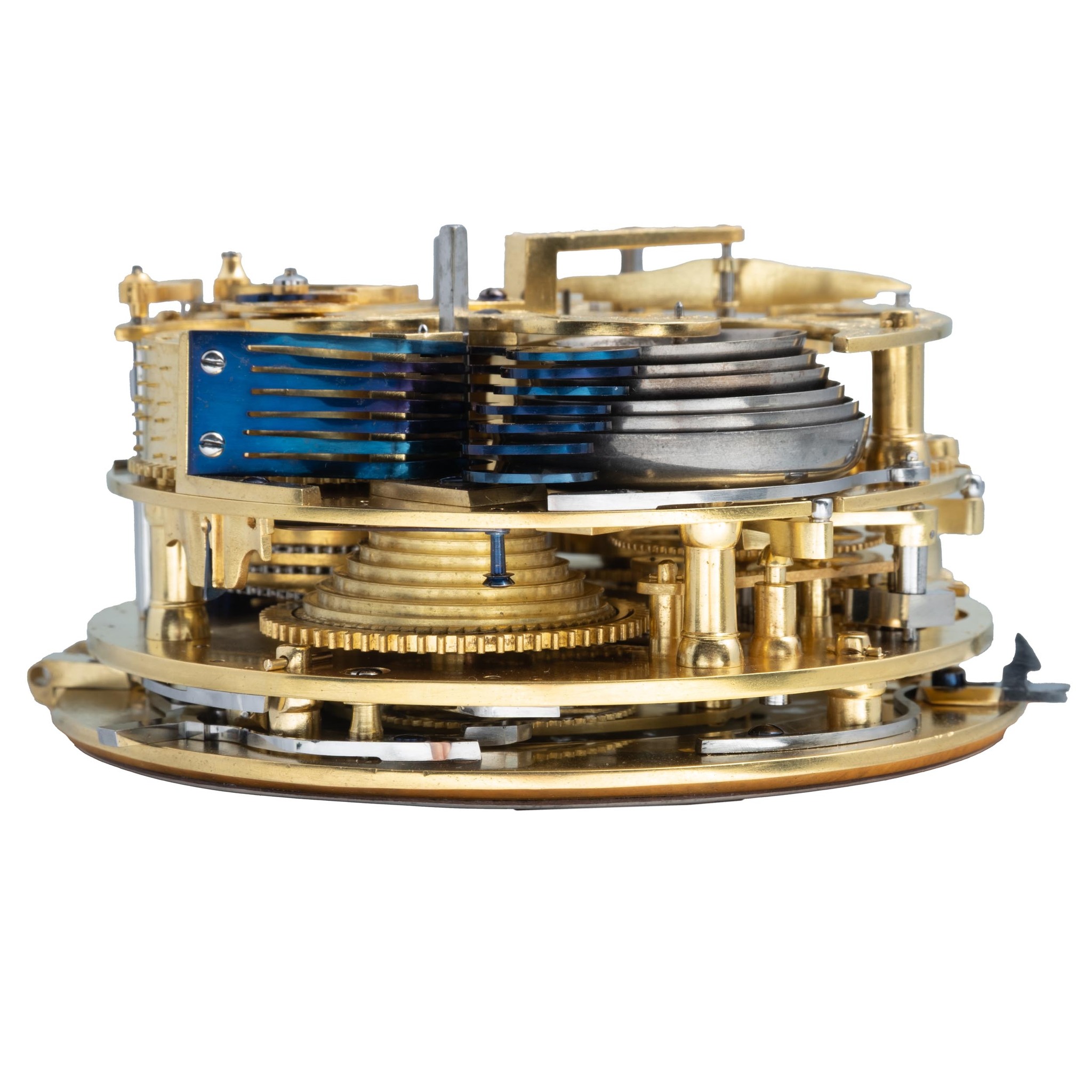
A magnificent large and extremely rare gilt brass and color stones, manual wind large coach watch, double-body case, the front glazed to reveal the dial, the bezel pierced and chased with foliate decoration set with alternating red and blue stones. The back decorated with a large royal blue enamel panel with intricate gold filigree motifs. Skeletonized movement with four trains for going, petite sonnerie quarter striking, musical train and alarm. Constructed in three tiers with a large fly governor for the musical train mounted above. Seven hammers striking on six bells (the only known example fitted with six bells for the musical train). The music plays on the hour and on demand by means of a lever beneath the bezel. Alarm and hours and quarters striking on a large bell in the case. White enamel dial with central minute hand, subsidiary hour and alarm-setting hand at 12 o’clock, subsidiary seconds at 6 o’clock, date aperture at 3 o’clock and jumping fifths of a second at 9 o’clock.”


Grading System
Grade:
Case: 3

Good

Movement: 3

Good

Dial: 3-01

Good

HANDS Original

Brand Jaquet Droz, Switzerland

Year Circa 1790

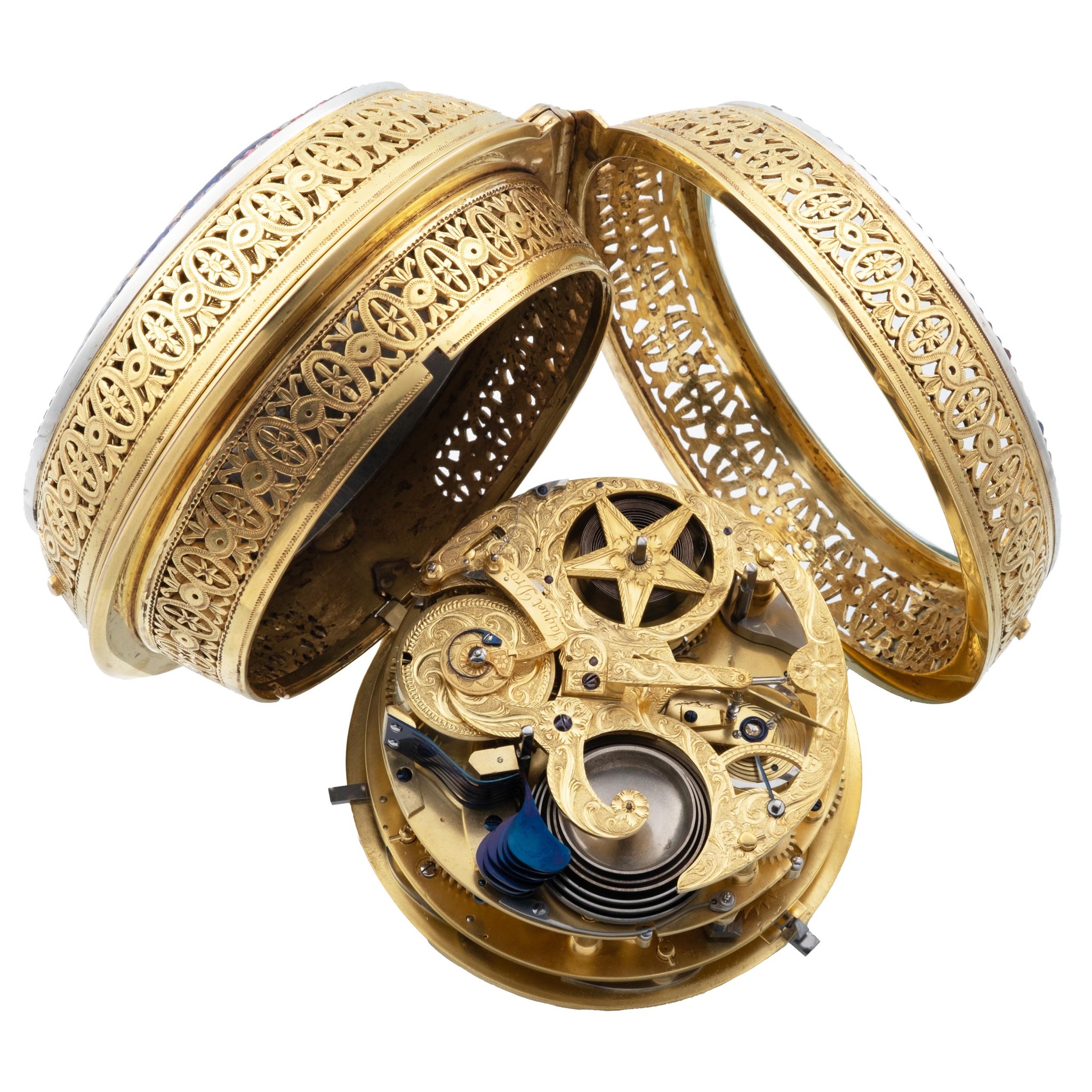
Caliber 76 mm., skeletonized fire-gilded plate, constructed in three tiers with gilt brass plates and bridges pierced and engraved with foliate decoration. Fusee with chain for the going train with jewelled cylinder escapement and plain balance. Separate going barrel for the alarm, quarter-striking train on a large bell in the back of the case, and musical train with pin-drum playing the tune on the hour, half and quarter hours, or at will by a lever at two o’clock, with seven hammers striking on six bells. The musical bridge is engraved with the exceptionally rare signature of Jaquet-Droz, making this a highly important and unique example.

Diameter 115 mm.

Signature Movement

Notes

At least 20 components are marked with the letter “A,” almost all neatly engraved, with a few lightly scratched. Interestingly, in lot 75 of Crott’s Sale No. 93, the components are marked “B,” representing a similar, yet less complicated watch. Among all known examples, this is the only one in which the lever releasing the musical train on the hour are entirely positioned between the plates. Later designs allow for easier and less precise adjustment. It is therefore highly probable that this watch represents the first in the series, made as a prototype.

Influence on the Chinese Market

Jaquet-Droz played a crucial role in introducing European watches and clocks to China, where his creations were seen as technological marvels and symbols of prestige. Beyond their utility, these carriage clocks fascinated the emperor and Chinese nobility, strengthening cultural and artistic exchanges between Europe and China.

Legacy and Modern Collections

Today, Jaquet-Droz remains synonymous with exceptional horology, and its historical carriage clocks are considered invaluable collector’s items. The brand continues to honor this legacy by incorporating historical inspiration into modern collections while innovating in automata and horological complications.

In summary, carriage clocks crafted by Jaquet-Droz symbolize 18th-century horological excellence, blending aesthetics, technology, and mechanical artistry, while playing a key role in fostering commercial and cultural ties between Europe and China.


Biography

Pierre Jaquet-Droz established his Geneva workshop in the late 18th century, marking an important phase in his career and contributing significantly to the reputation of Swiss watchmaking on an international scale. After achieving success in La Chaux-de-Fonds, where he built his first automata and clocks, Jaquet-Droz expanded his operations by opening a workshop in Geneva around 1784. At the time, Geneva was already a thriving center for horology, known for its high demand for luxury goods and precision timepieces.
Export to China: From the Geneva workshop, many of Jaquet-Droz’s creations were exported to China, a significant market for luxury European timepieces. The elaborate watches and automata produced in Geneva were highly sought after by the Qing court, particularly by Emperor Qianlong, who was fascinated by Western technology and horology. The intricate detailing, enamel work, and use of automata made these pieces stand out in the Chinese market.