From the late 16th century onwards, the Chinese Imperial Court developed an extraordinary fascination for European clocks, watches, automata and mechanical curiosities. These objects were initially introduced to China as diplomatic gifts, most famously by Jesuit missionaries such as Matteo Ricci, who presented mechanical clocks to the Wanli Emperor in the early 17th century. Their novelty, technical sophistication and ingenious mechanisms made them objects of exceptional prestige at court.
Under the Qing dynasty, and particularly during the reigns of the Kangxi, Yongzheng and Qianlong Emperors, this fascination developed into a sophisticated and insatiable demand for European horological objects. Clocks and watches were no longer merely timekeeping instruments: they were symbols of wealth, learning and cosmopolitan taste, and formed an important part of the imperial collections. European clocks, automata and musical mechanisms were displayed in the imperial palaces and were frequently incorporated into elaborate objects designed to astonish and entertain.
The growing demand created an important commercial opportunity for European makers. Swiss and English watchmakers, manufacturers and merchants increasingly regarded China as a highly lucrative market. European traders operating in Canton and other commercial centres became known in contemporary Chinese sources as Sing Song merchants, a term associated with the foreign watch and clock trade. In response to the tastes of the Chinese market, European makers developed highly imaginative objects specifically intended for export to China. Their creations combined the precision of European horological technology with the decorative vocabulary of the finest goldsmiths, enamellers, jewellers and craftsmen.
These objects frequently took the form of animals, flowers, musical instruments, weapons, snuffboxes and other ingenious shapes, concealing within them miniature watches, automata, musical movements, repeating mechanisms or other complications. Their purpose was often as much to surprise and delight as to indicate the time. Extreme miniaturisation allowed remarkably complex mechanisms to be incorporated into objects of extraordinary refinement, resulting in a unique synthesis of mechanical ingenuity and decorative art.
The importance of this trade is reflected in the extraordinary collections preserved today in the Palace Museum in Beijing, within the former Imperial Palace of the Forbidden City. More than one thousand European clocks and watches, together with numerous mechanical curiosities and automata, remain in the imperial collections, providing exceptional evidence of the scale and sophistication of the exchange between European horological workshops and the Chinese Imperial Court.
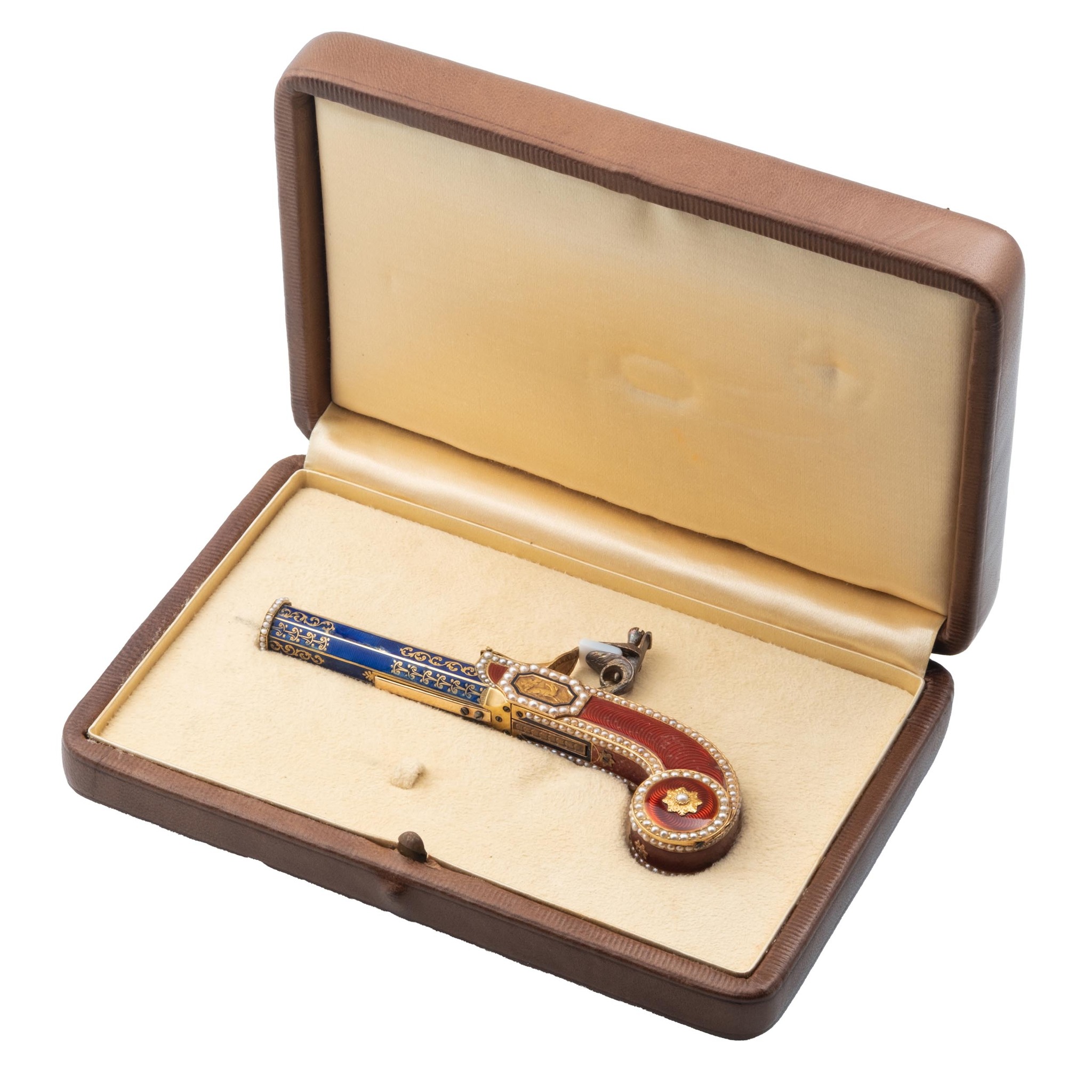
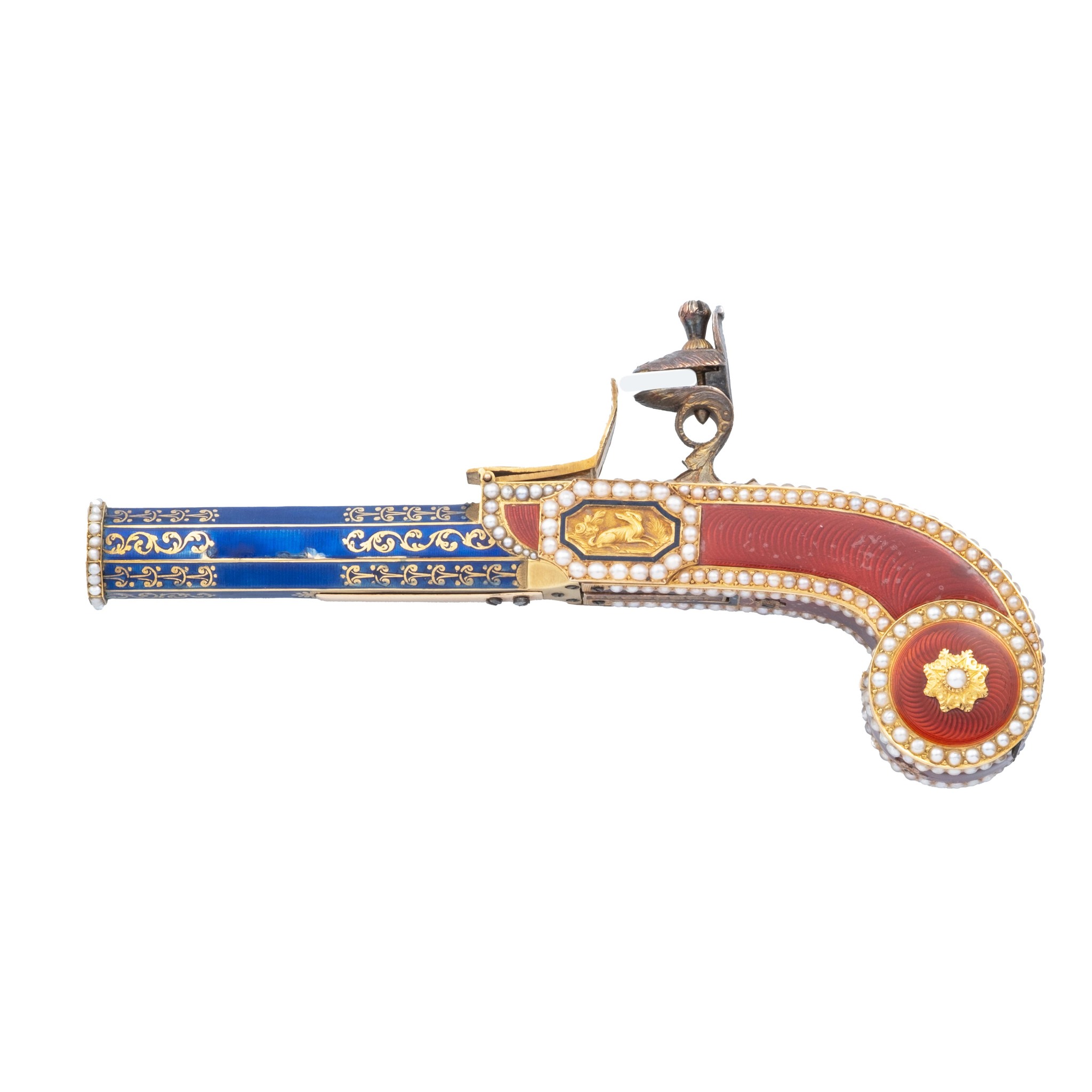
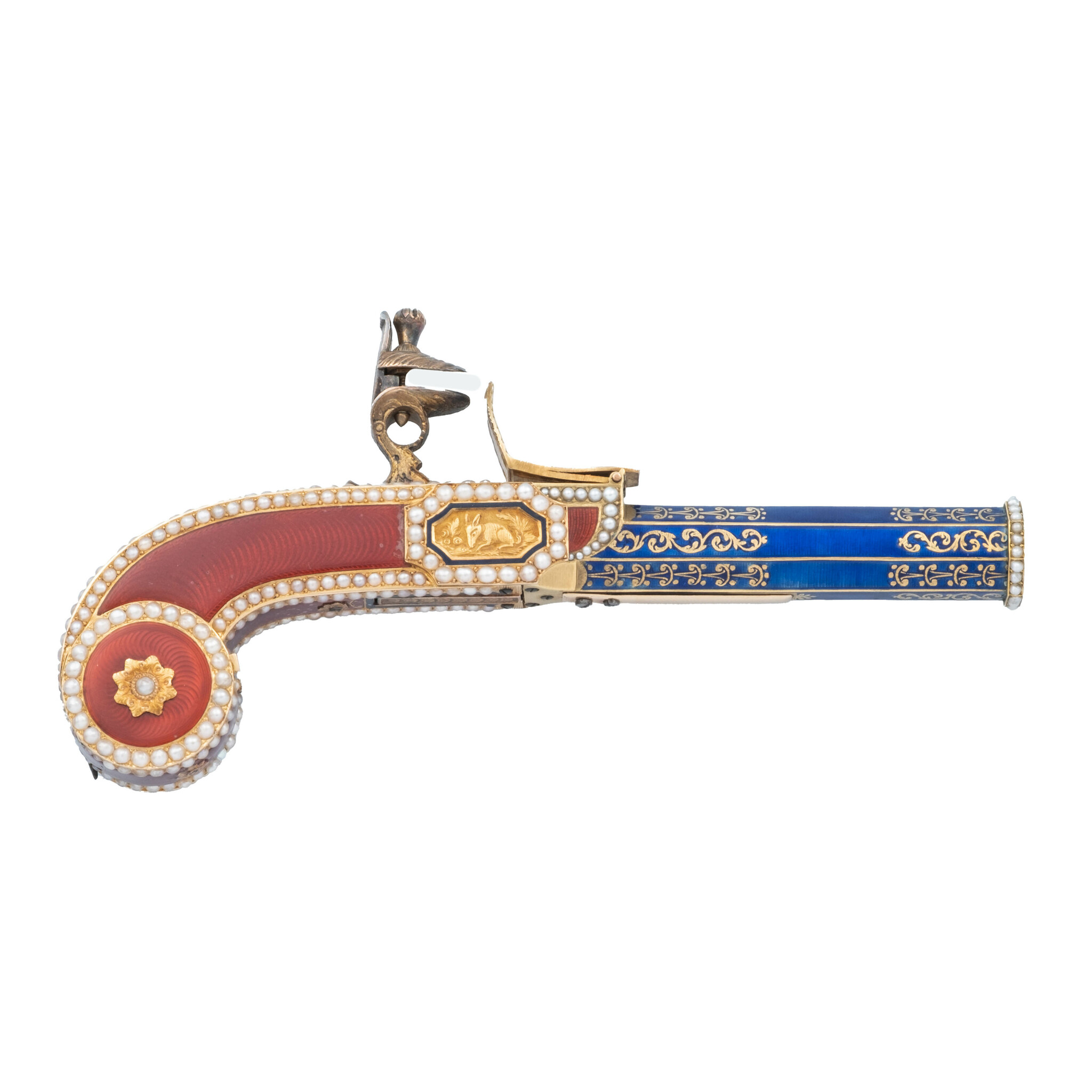
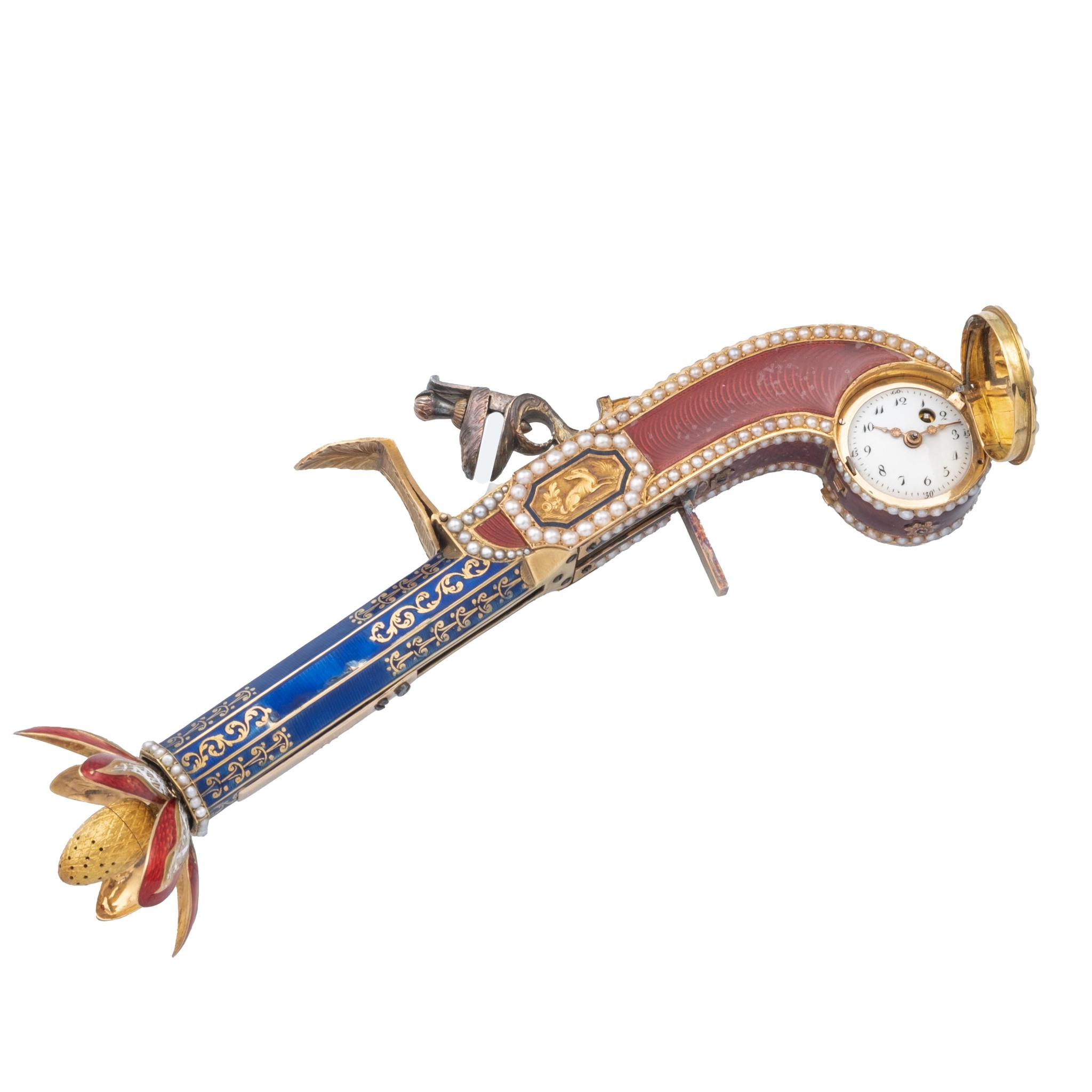
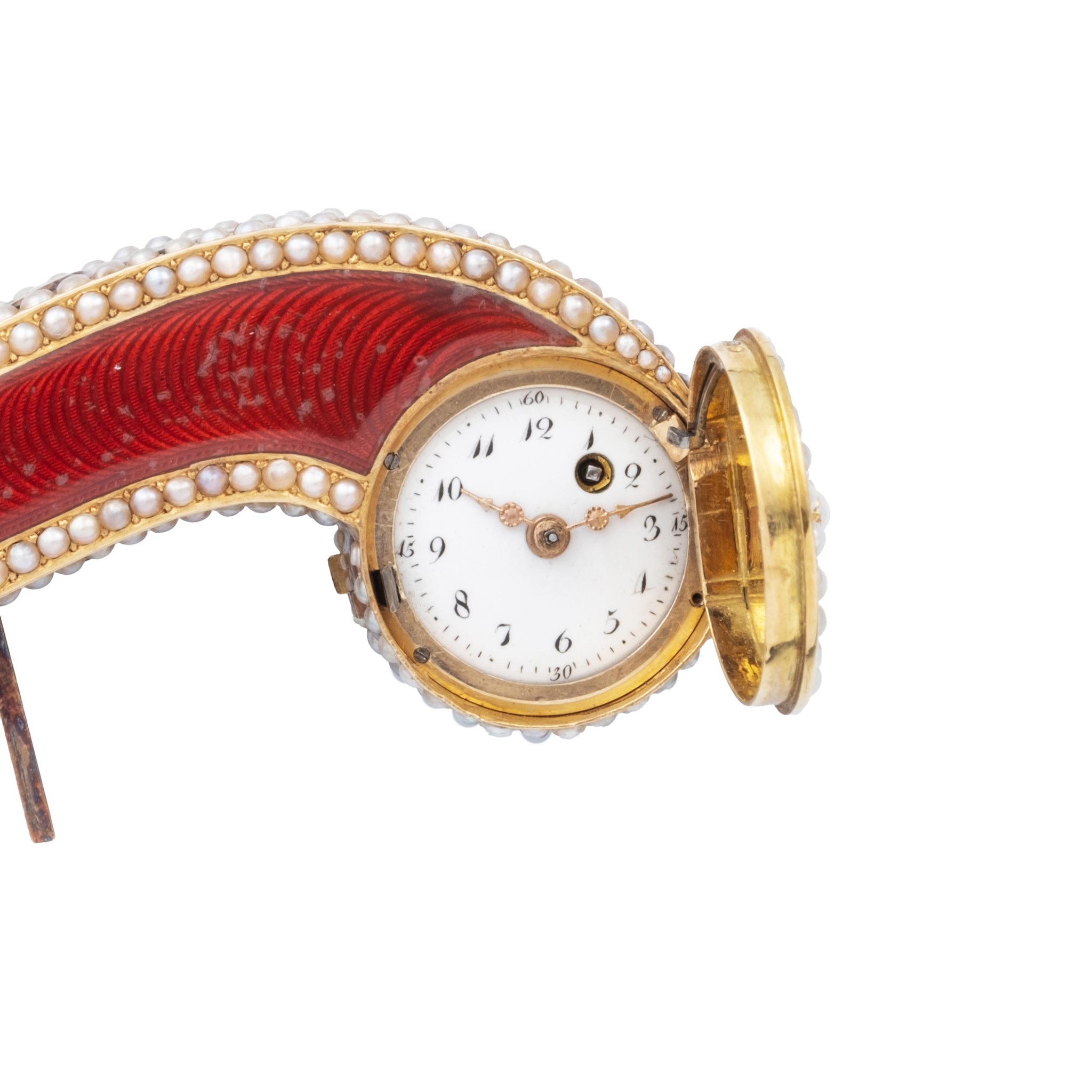
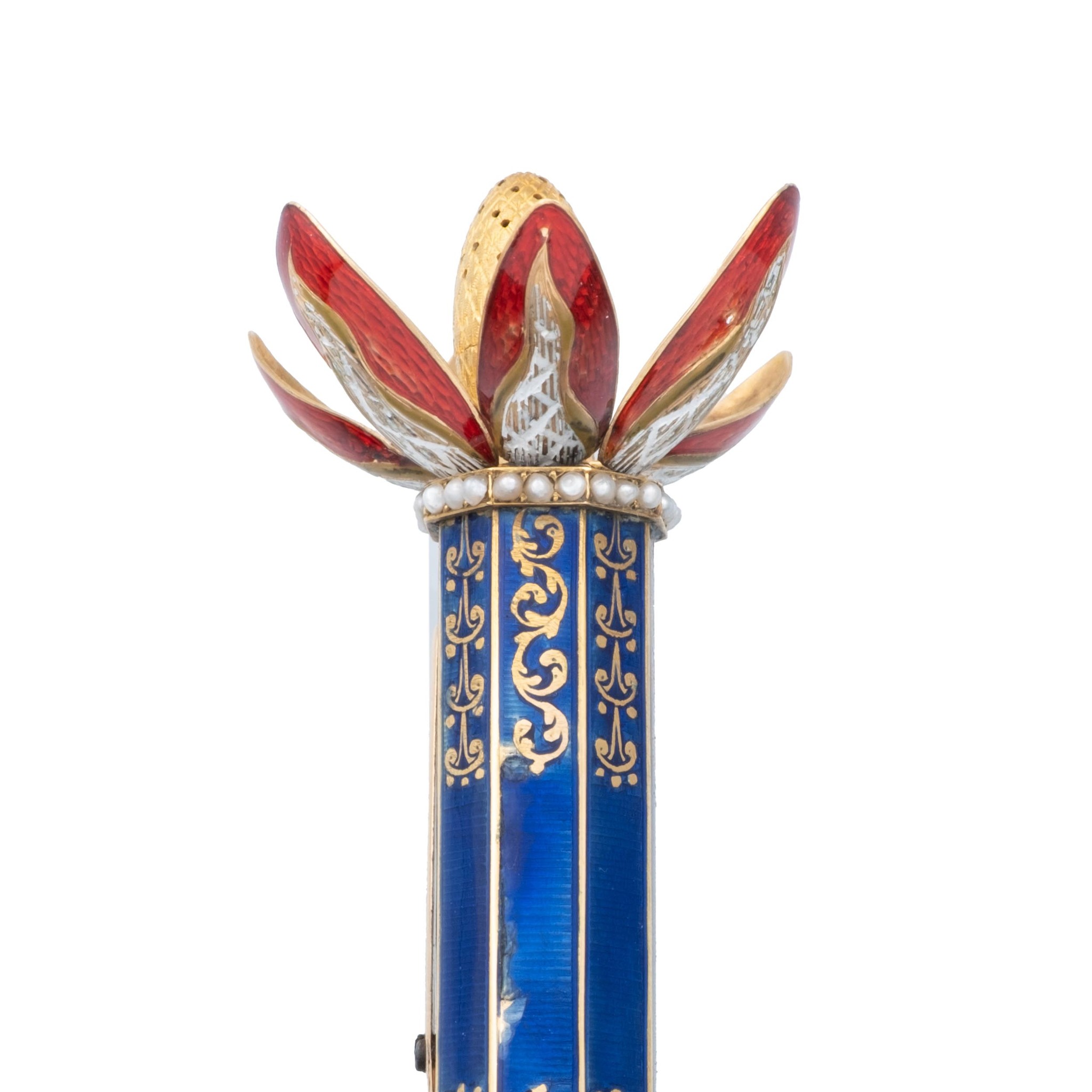
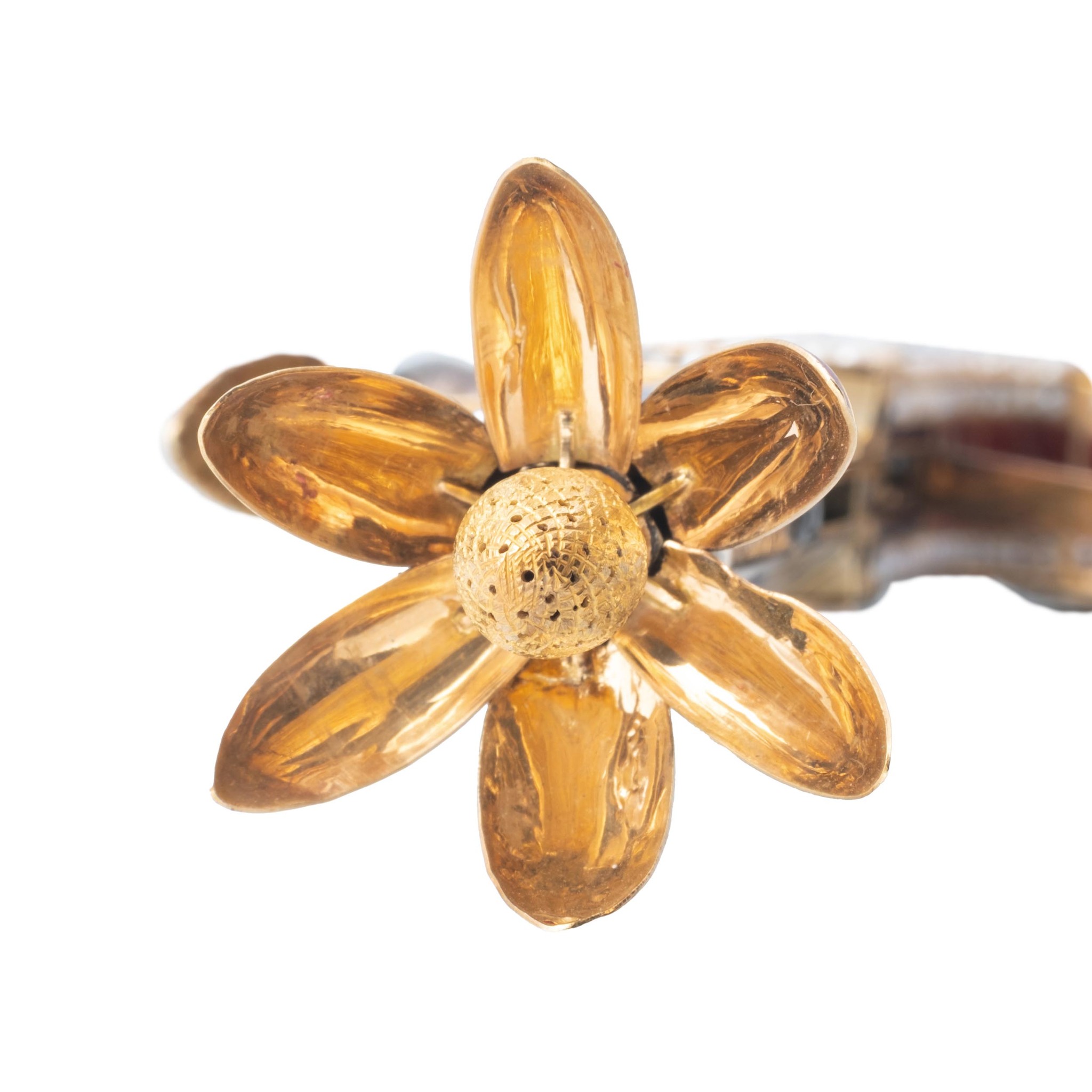
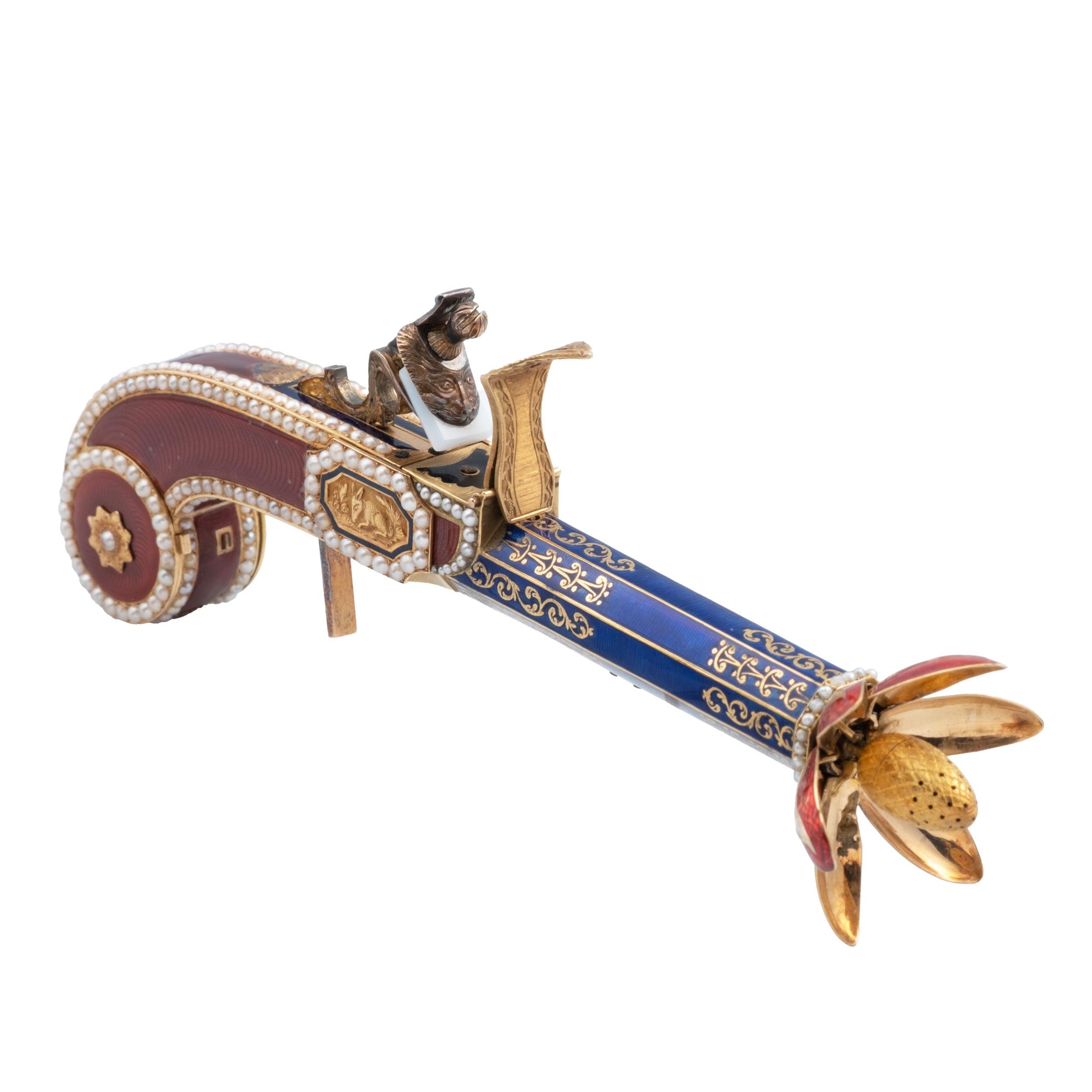
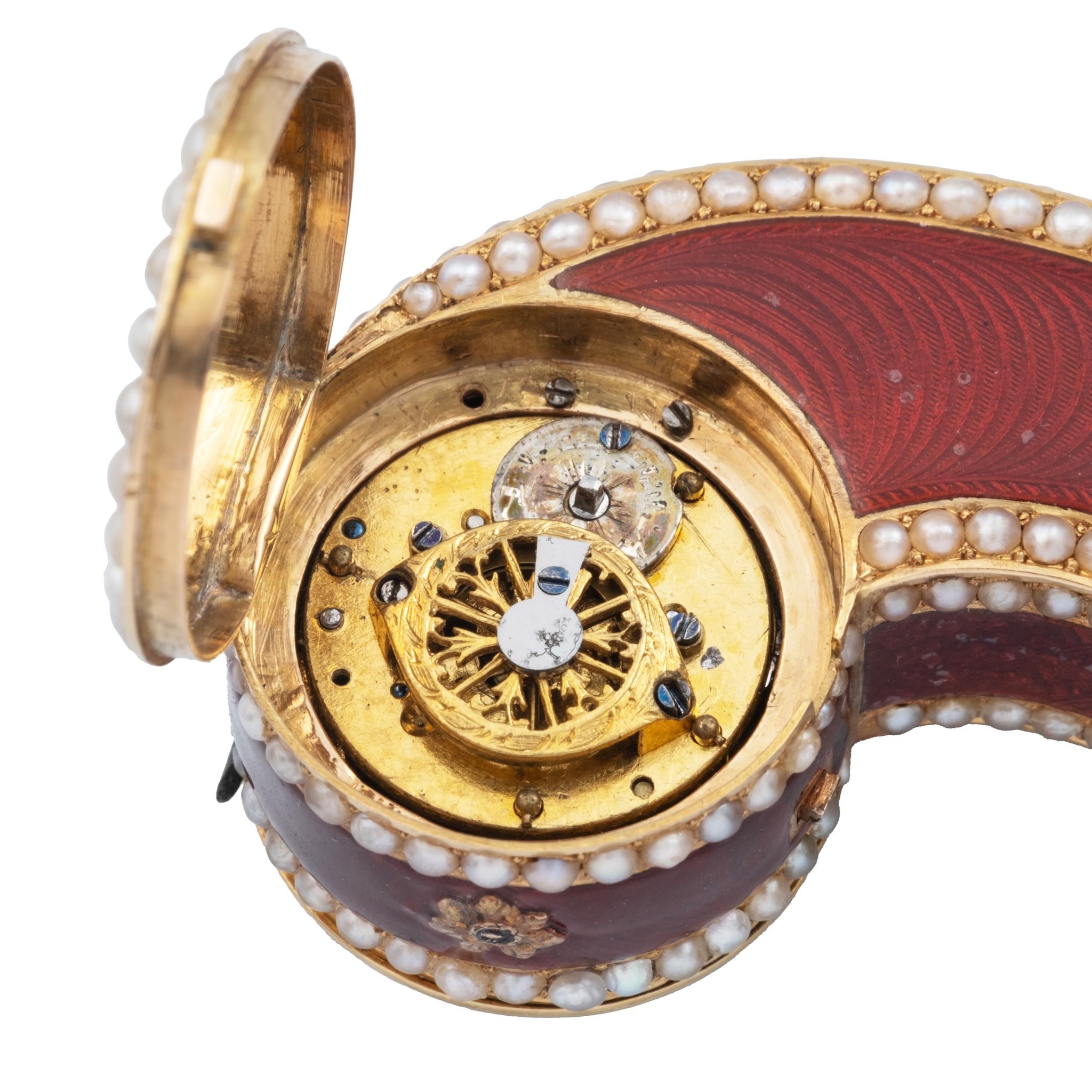
The present object is a particularly remarkable expression of this tradition. Combining a miniature watch and a perfume sprinkler within the form of an elaborately decorated gold and enamel pistol, it represents a spectacular marriage of European horological ingenuity and the refined craftsmanship of the early 19th century. The conceit is especially ingenious: an object traditionally associated with weaponry is transformed into a precious and highly sophisticated luxury object, its functional elements concealed beneath an exquisitely decorated exterior.
Such creations illustrate the extraordinary lengths to which European makers were prepared to go to satisfy the appetite of their most demanding patrons. The combination of a concealed timepiece, perfume sprinkler, goldsmith's work, polychrome enamel and pearl decoration required the collaboration of highly specialised craftsmen. The resulting object transcends the conventional definition of a watch, becoming simultaneously a horological instrument, a jewel, a curiosity and a symbol of status.
The production of such highly complicated and visually spectacular objects was not restricted to the Chinese market. Similar creations were commissioned or acquired by European aristocratic and royal families throughout the 18th and 19th centuries. Nevertheless, the Chinese market played a particularly important role in encouraging the development of fantastical forms and unprecedented combinations of horological complications and decorative arts.
The present pistol-watch therefore belongs to a very rare category of objects born from the encounter between East and West: European mechanical ingenuity conceived for an international clientele, executed by some of the finest craftsmen of the period, and transformed into objects of extraordinary artistic and technical sophistication.