Geneva, May 10, 2026
NIKOLAUS SCHMIDT THE ELDER, GERMANY, AUGSBURG RENAISSANCE WATCH WITH FOLIOT AND STACKFREED
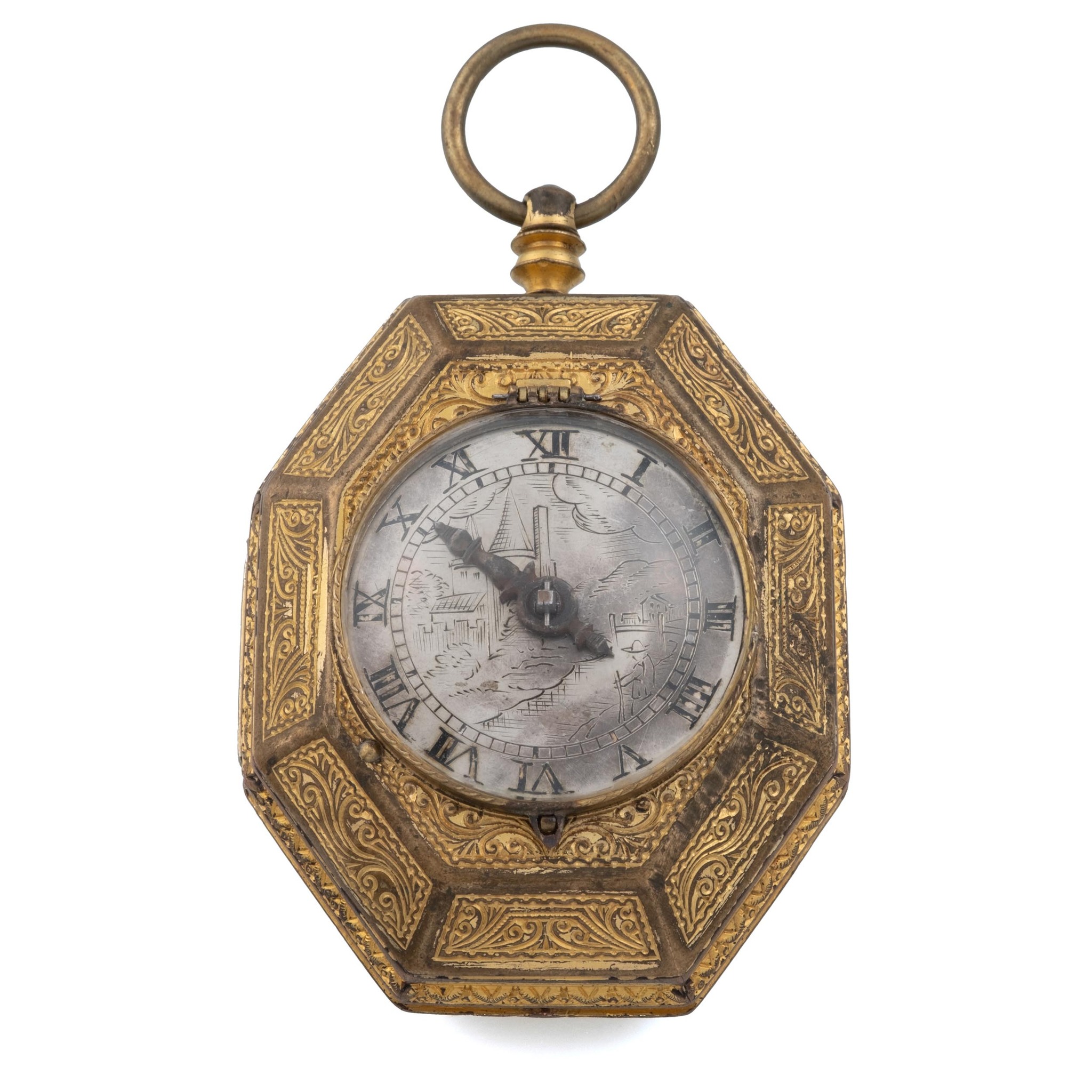
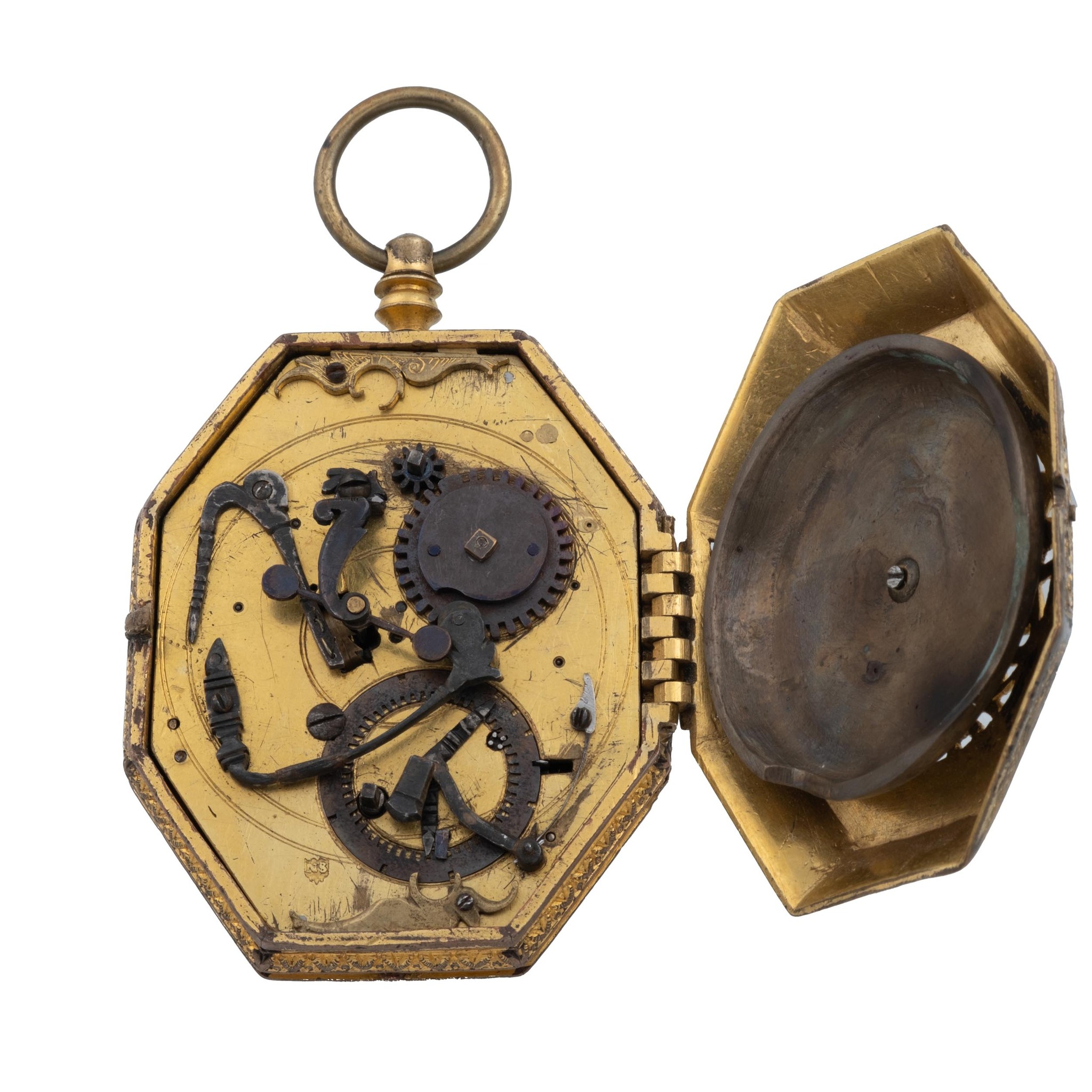
A very fine, rare and early, brass copper, manual wind open-face, key-winding Renaissance watch. Elongated octagonal case, the front engraved with a repeated pattern, the hinged back cover entirely pierced and finely chased. The lid fitted with a later-added bell. Silver dial with Roman numerals and an engraved view of a town, single iron hand. Octagonal brass movement signed with the initials “NS” within a shield for Nikolaus Schmidt the Elder; verge escapement with steel foliot and C-shaped stackfreed.
| Grading System | |
|---|---|
Grade: |
|
Case: 3-11 |
Good Slightly worn |
Movement: 3-6-8* |
Good Slightly oxidized Slightly scratched Overhaul recommended, at buyer's expense |
Dial: 3-6-8-01 |
Good Slightly oxidized Slightly scratched HANDS Original |
Brand Nikolaus Schmidt the elder, Germany
Year Circa 1600
Caliber 72 mm. X 60 mm., gilt brass full plate with turned baluster pillars, C-shaped stackfreed and fixed barrel, verge escapement, iron foliot. Striking train driven by a fixed barrel, gilt brass plate, iron count wheel on the back plate, later bell mounted on the lid. Signed with the initials “NS” within a shield for Nikolaus Schmidt the Elder.
Diameter 82 mm. X 68 mm.
Signature Movement