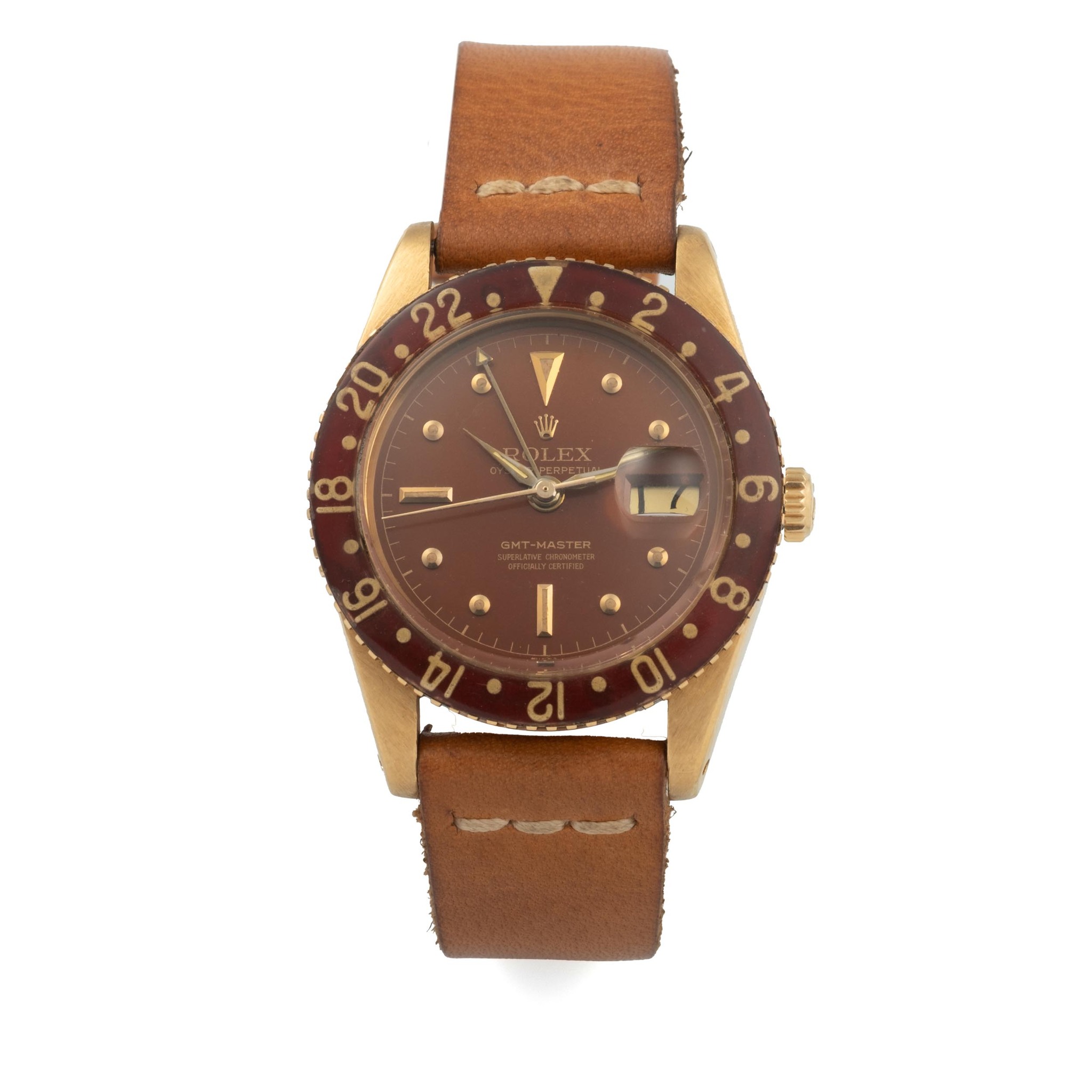
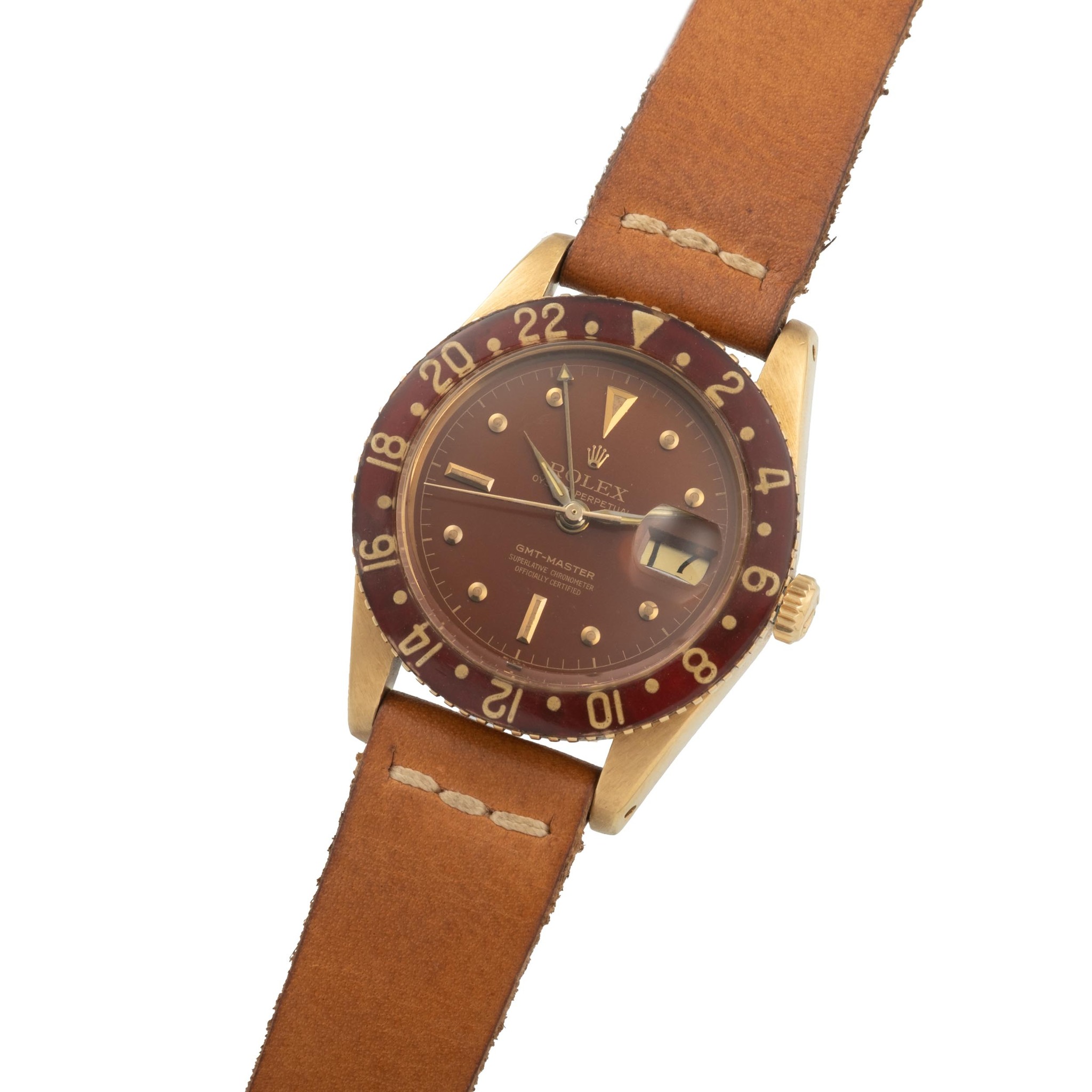
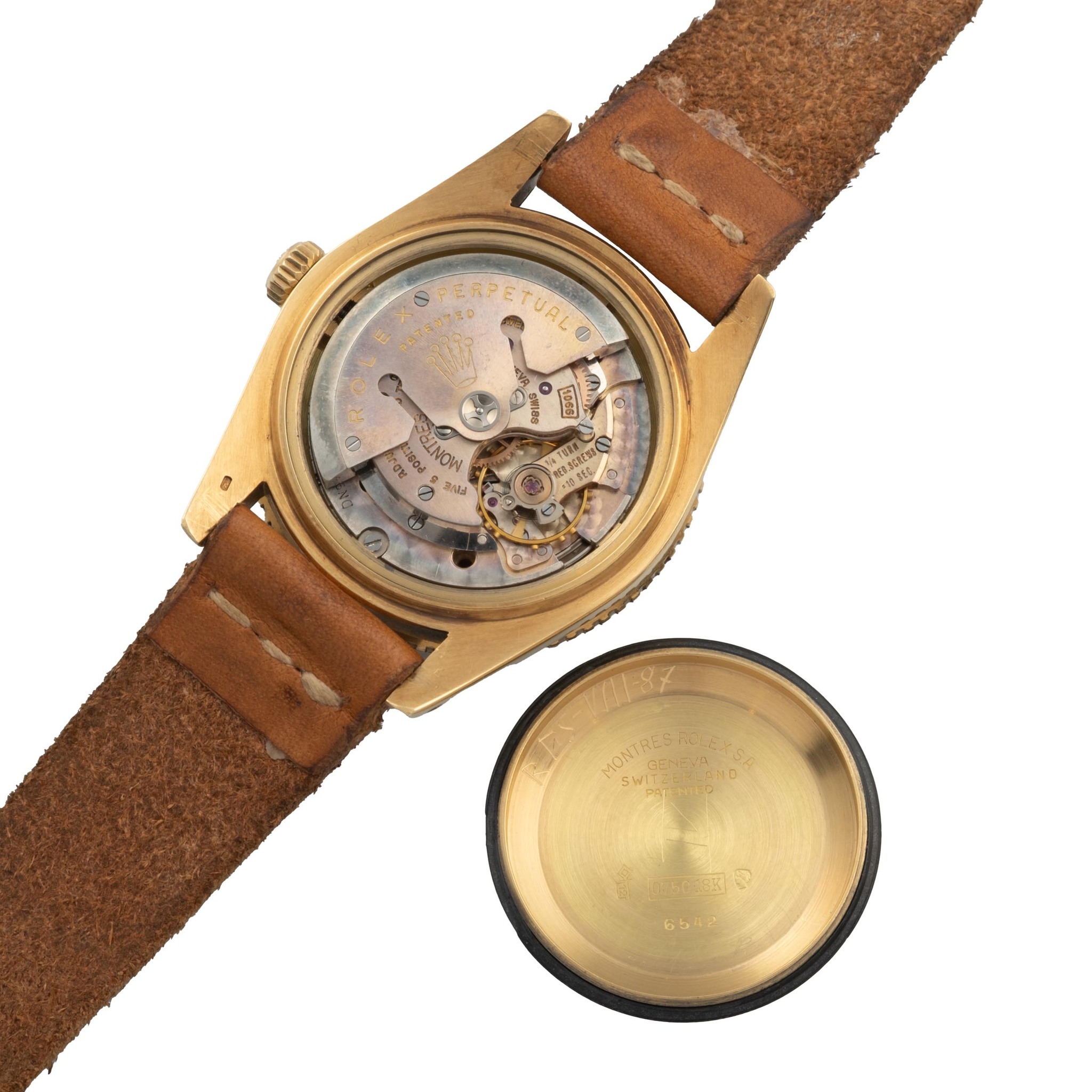
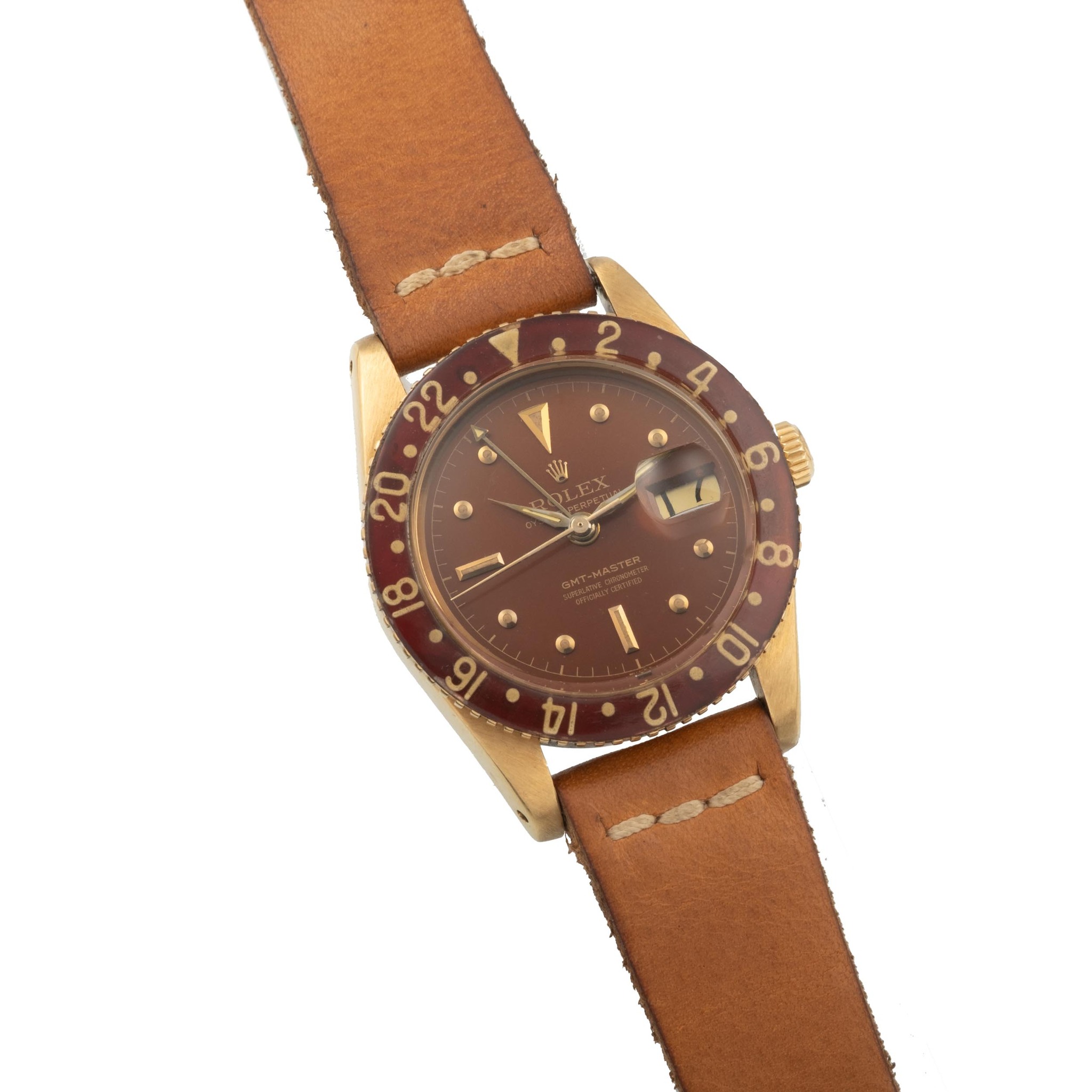
The Reference 6542 holds a foundational place in the history of the GMT-Master, produced between approximately 1954 and 1959 and representing the very first expression of a complication conceived in direct collaboration with Pan American World Airways, whose transatlantic crews required a reliable and legible means of tracking two time zones simultaneously across the new jet-age routes connecting continents. That this inaugural reference was also offered in 18-karat yellow gold places the present example within an already restricted subset of an inherently scarce reference, the gold variants having been produced in numbers sufficiently limited as to render their appearance at auction a genuinely uncommon occurrence.
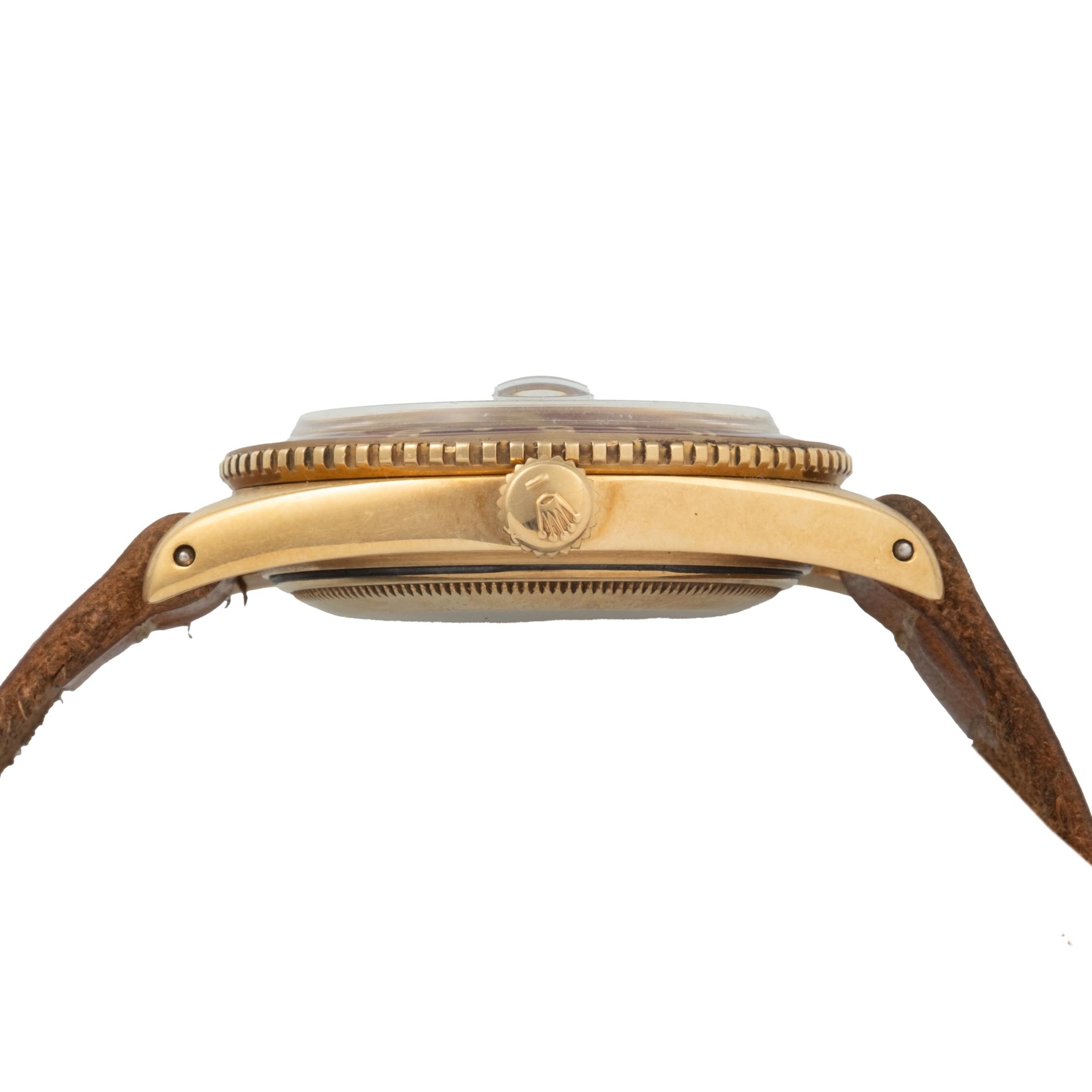
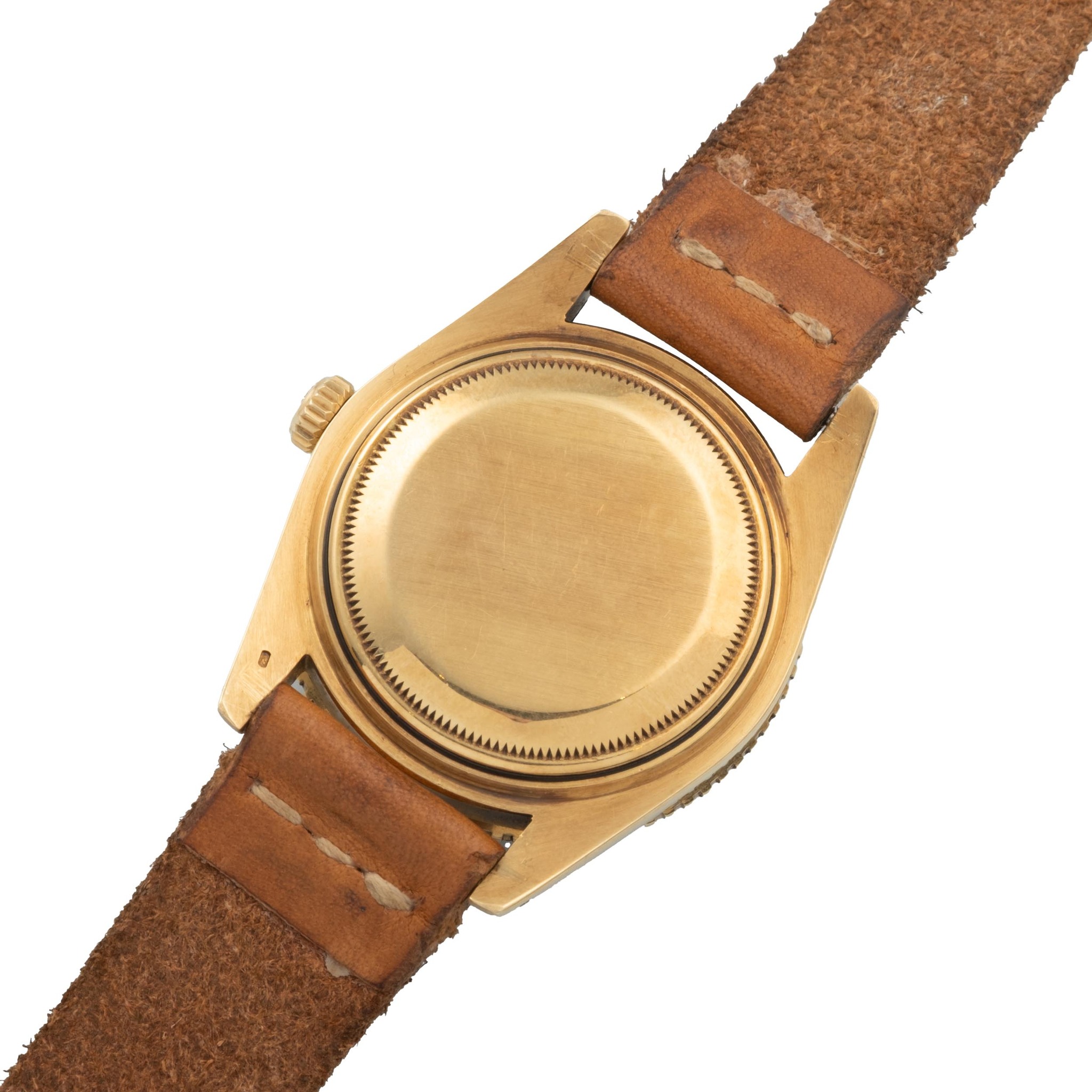
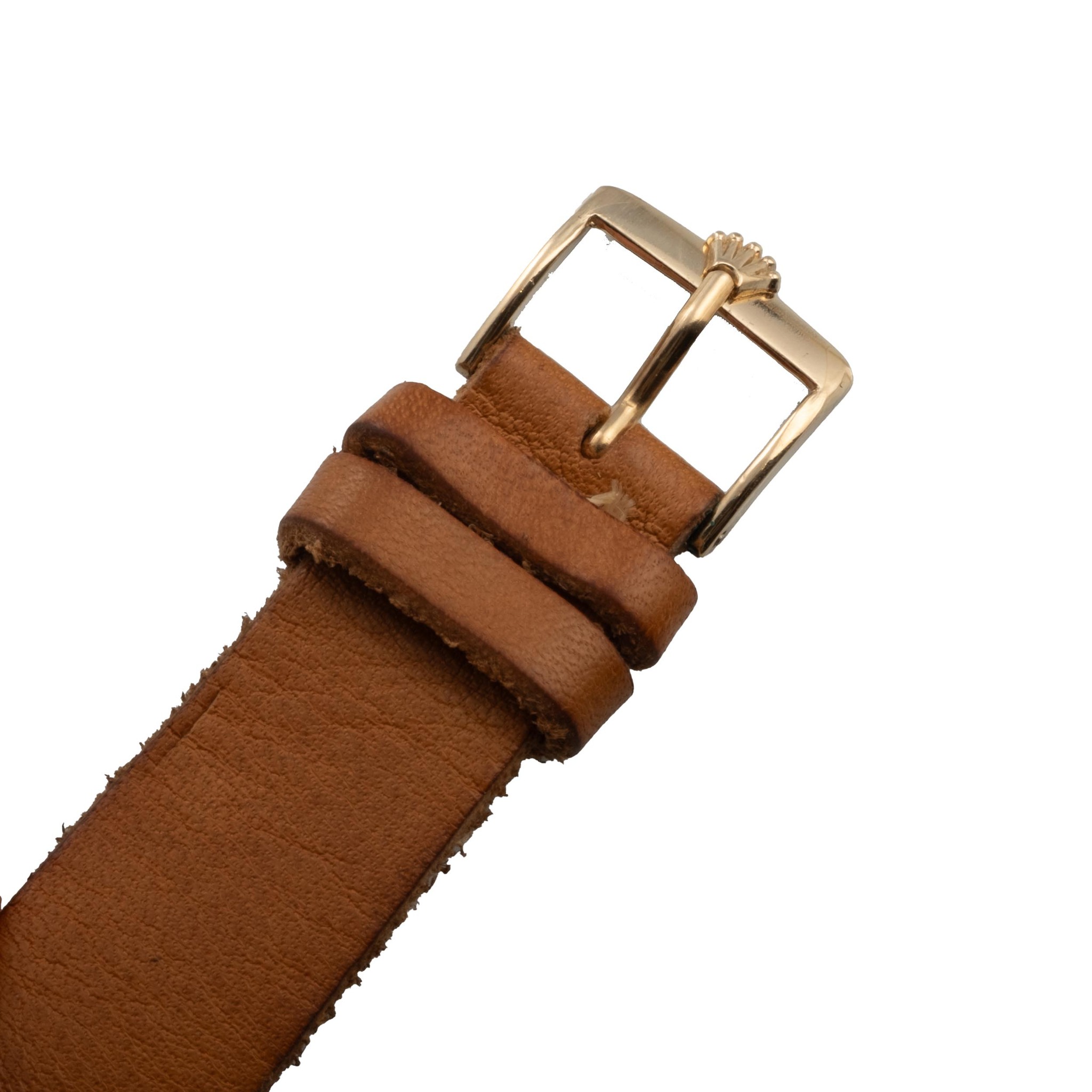
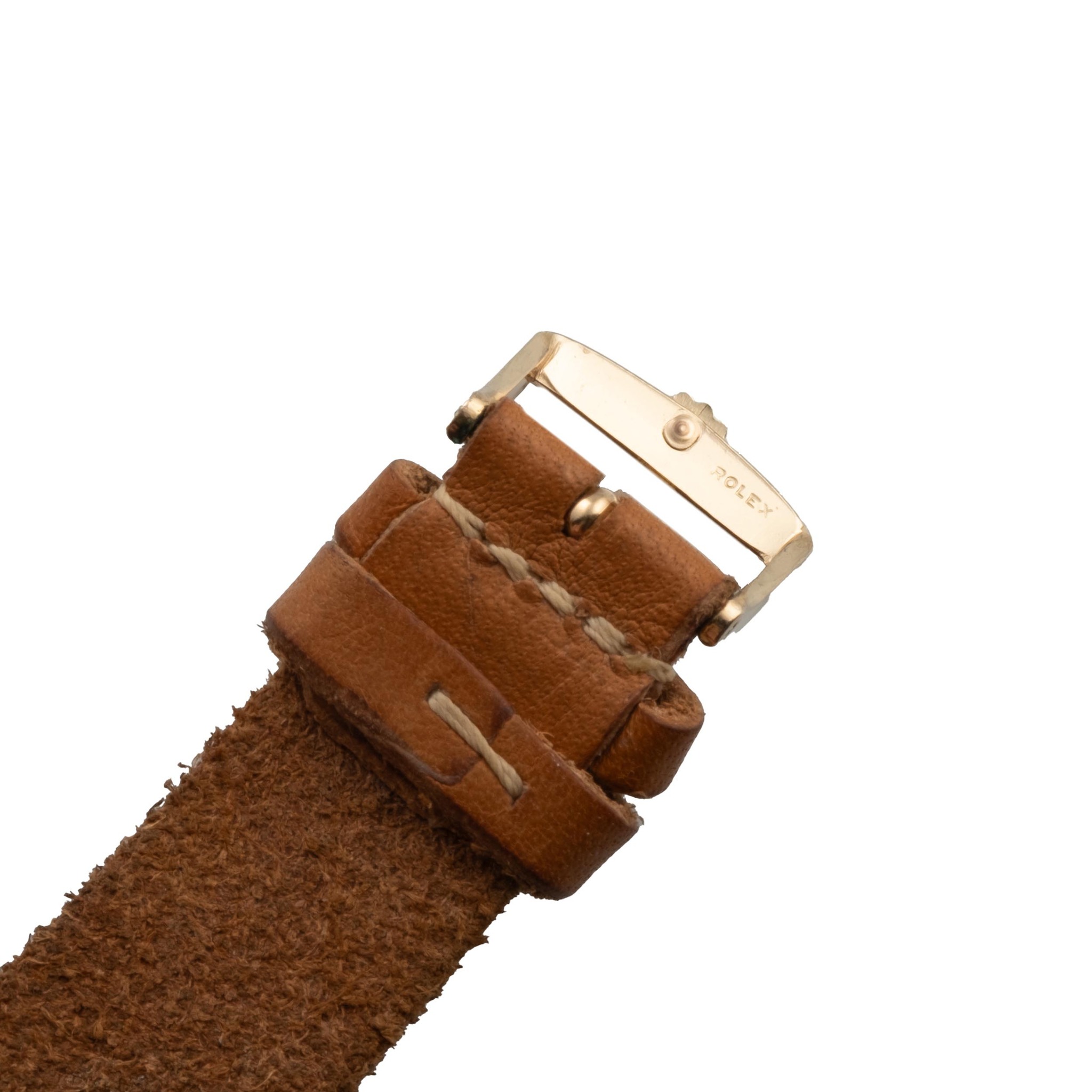
The present example displays a highly attractive and warm overall appearance, the yellow gold case having acquired over decades the softened contours and gentle patina that only unpolished original surfaces can produce, and which no subsequent restoration could authentically replicate. The dial exhibits rich and homogeneous ageing of exceptional character, its surface having evolved uniformly across the entire chapter ring in a manner that speaks directly to decades of careful preservation rather than neglect, the indices retaining their original luminous material in a state of noble deterioration consistent with the period of manufacture. The bezel presents attractive signs of ageing equally consistent with the age of the reference, its acrylic insert, a defining and period-correct feature of the 6542 before the transition to metal bezels on the successor reference 1675, showing the natural evolution of a material that was never intended to be permanent but has become, through its very fragility and scarcity in original condition, one of the most sought-after attributes of early GMT-Master collecting. Preserved on a leather strap, this configuration offers a particularly refined interpretation of one of Rolex's earliest and most historically significant sport references, the absence of a bracelet lending the watch a dress-watch elegance entirely appropriate to its gold construction and entirely in keeping with the manner in which such pieces were frequently worn and appreciated in their own era.