Geneva, Nov 08, 2026
UNSIGNED, SWITZERLAND, REVOLUTIONARY TIME, MADE FOR THE FRENCH MARKET WITH THE ORIGINAL BOX, SILVER
TO BE SOLD WITHOUT RESERVE
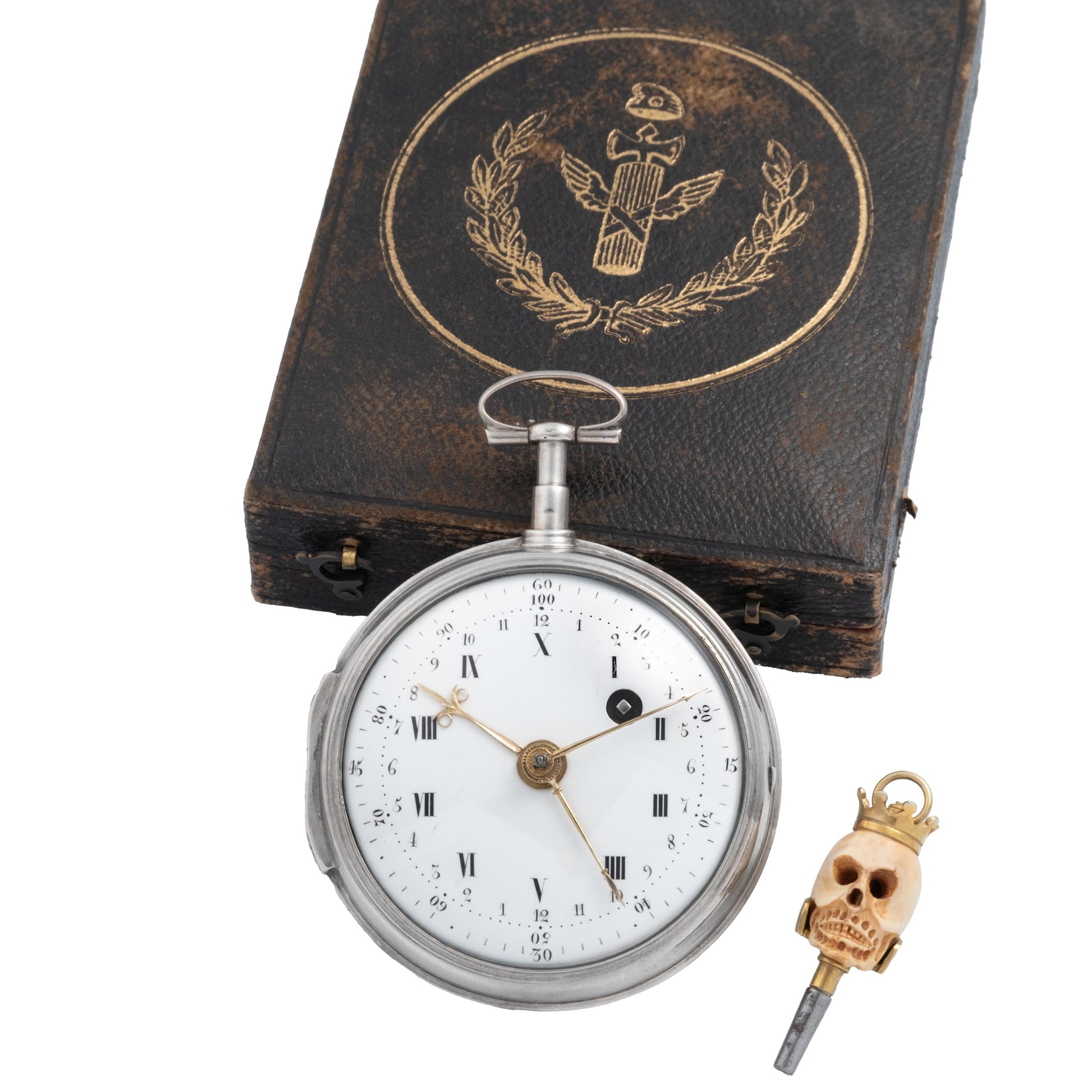
A very fine and rare, silver, manual wind open-face pocket watch with a polished “Directoire”-shaped case. White enamel dial with concentric indications for decimal and duodecimal time: black radial Roman numerals with Arabic 100-minute divisions, and Arabic numerals I–12 in each half of the dial, with outermost 60-minute divisions. Pierced gold hands.
| Grading System | |
|---|---|
Grade: AAA |
Excellent |
Case: 3-6-8 |
Good Slightly oxidized Slightly scratched |
Movement: 3-8* |
Good Slightly scratched Overhaul recommended, at buyer's expense |
Dial: 3-01 |
Good HANDS Original |
Brand Unsigned, Switzerland
Model REVOLUTIONARY TIME
Year Circa 1794
Caliber 43 mm, hinged, frosted gilt full plate with cylindrical pillars, fusee and chain, verge escapement with micrometric potence adjustment, brass three-arm balance with flat balance spring, continental cock, silver regulation dial.
Diameter 56 mm.
Accessories Original box decorated with a highly symbolic Republican motif. At the centre is a fasces surmounted by a Phrygian cap, flanked by wing-like elements and surrounded by laurel branches. This iconography is closely associated with the French Revolution and the early French Republic, symbolising unity and authority (fasces), liberty (Phrygian cap), and victory and glory (laurel) and the key designed carved skull classic meaning''mementto mori'' (remember you must die).